WorkCompCollege – Workers' Compensation Certifications

Blog

  • The Most Dangerous Words in Your Career: “I Already Know Enough”

    Four words have quietly ended more careers than any layoff: “I already know enough.”

    I started my professional career as a mainframe computer operator. Today, I’m the Provost of WorkCompCollege.com.

    There is no logical career path connecting those two jobs, at least not one I could have predicted when I was sitting at the console of a mainframe computer four decades ago.

    The common thread throughout was curiosity. I have spent my entire adult life wanting to know more than I knew yesterday. Not simply about the job I was doing, but about subjects, technologies, people, and perspectives that might have little obvious connection to my immediate responsibilities.

    I believe the moment you stop learning is the moment you start becoming irrelevant. With the pace of change we’re experiencing today, being a lifelong learner is even more important.

    My first professional reinvention was from mainframe computer operator to software developer. I taught myself multiple programming languages and platforms, which eventually led to business analysis, project management, and department management. Then I entered the workers’ compensation industry and began to engage in an entirely different world: insurance, healthcare, legal, regulations, claims management, human behavior. As I leveraged my software development skills to create new products, I added more skills like marketing and sales. That led to an opportunity to write and speak at conferences, ultimately creating the RxProfessor brand. I even evolved my subjects over time, from opioids to AI.

    Then, in 2021, I got laid off. After decades of building a reputation, I had to answer a question I hadn’t asked myself in years: What now? The answer had been built, piece by piece, from everything I’d learned when nobody required me to. My employer’s decision led to my next reinvention: business owner and Provost of WorkCompCollege.com.

    I sometimes joke that I’m on version 476 of Mark Pew.

    I didn’t learn all those things because I knew I would need them someday. I learned because I was interested. When new opportunities appeared, or circumstances forced me to change direction, my accumulated knowledge and experiences made those transitions possible. Everything I learned yesterday was quietly building toward today.

    I’ve lived through the transitions from no computers to mainframes, personal computers, the internet, mobile, cloud computing, and remote work. Each transformation changed how people worked and what they needed to know. AI feels different, though, because of the speed and breadth of its potential impact. Skills that were valuable yesterday may become automated tomorrow. Tasks that once required specialized expertise can increasingly be accomplished by someone who knows how to ask the right questions and evaluate the answers. The World Economic Forum’s 2025 Future of Jobs Report estimates that 39% of workers’ core skills will change by 2030. The status quo isn’t coming back.

    I’ve discovered that knowledge from seemingly unrelated subjects frequently becomes useful in unexpected ways. My technology background influences how I think about education and business development. My experience in project management helps me organize complex initiatives. Marketing taught me to communicate ideas provocatively. Speaking and writing have forced me to clarify what I believe in a concise and understandable manner. Studying human behavior has fundamentally changed how I interact with the world, both professionally and personally.

    Experience is a wonderful teacher, but it can also become a trap. Nobody says “I already know enough” out loud. We say it with our calendars, by what we never make time to learn.

    Author David Epstein explains why in Range: Why Generalists Triumph in a Specialized World. He describes “kind” learning environments, like golf or chess, where the rules are clear and practice makes perfect. Then there are “wicked” environments, where the rules shift, feedback is delayed, and today’s situation rarely matches yesterday’s. In wicked environments, people who draw on a wide range of experience consistently adapt better than those who know only one thing. If you’ve ever handled a work comp claim, you already know which kind of environment we work in. Learn one thing every quarter that your job doesn’t require.

    A claims adjuster needs to understand statutes, case law, compensability, medical terminology, financial reserving, claims procedures, and return-to-work best practices (among many others). But to be effective, they also need to understand:

    • Psychology: recognizing fear avoidance and catastrophizing before they stall recovery
    • Effective communication: the first call that sets the tone for the whole claim
    • Artificial intelligence: knowing what to automate, and what to double-check
    • Leadership: influencing outcomes you don’t control
    • The economics of healthcare: why the cheapest provider is rarely the least expensive claim

    The same principle applies to clinicians, attorneys, salespeople, executives, and just about everyone else.

    Sometimes the most valuable thing you learn has nothing to do with what you thought you needed to learn. That’s why I encourage people to seek information from multiple sources and perspectives, including those that challenge their assumptions. For example, I don’t limit my daily reading to work comp content, because macro trends eventually find their way into our industry.

    Ask yourself these three questions:

    1. What have I learned in the past 90 days that genuinely changed my thinking?
    2. What subject outside my immediate expertise could make me more effective, personally or professionally?
    3. What am I doing today to prepare for opportunities or disruptions that I cannot yet anticipate?

    Those questions apply whether you’re just entering the workforce or approaching retirement. Give question two your attention for 30 minutes per week for the next 90 days. When the 90 days are up, answer question one again. After all, the value of education isn’t what you know when the course ends. It’s what you do differently afterward.

    If question two left you stuck, that’s exactly why we built the Advanced Training & Education Center (ATEC) at WorkCompCollege.com. ATEC reflects what I think continuing education should look like: broad, ongoing, and intentionally diverse. Rather than focusing exclusively on a single certification or discipline, ATEC provides an expanding library of learning opportunities across the workers’ compensation ecosystem. There are resources covering claims management, medical management, legal issues, risk management, return to work, humanities, and technology. Specialized offerings explore subjects such as mental injury claims, independent medical examinations, medical settlements, and practical AI applications. Jurisdiction-specific content now covers 38 states, each explained by a human expert in that state’s nuances. Pick the course farthest from your job description, as that could be your answer to question two.

    So who owns your professional development? TIP: You do.

    An employer can provide opportunities. A manager can encourage you. An organization can pay for training. But nobody can make you curious. Nobody can force you to ask better questions, explore unfamiliar subjects, or reconsider long-held assumptions. Face it … nobody has a greater stake in your future than you do.

    Replace “I already know enough” with three better words: “Tell me more.” I’m working on version 477. What version are you on?

  • Straight Outta Workers’ Comp, Episode 27: Urgent Care and Workers’ Comp … Between the ER and Six Weeks From Tuesday (Video)

    There are roughly 15,000 urgent care centers in this country handling 200 million patient visits a year, and most of workers’ comp still treats them as the place you go when the ER is full. Dr. Paul Nanda, Chief Medical Officer of TGH Urgent Care powered by Fast Track, joins Mark and Bob to explain what the industry is missing. He makes the case that urgent care is not a waystation but a specialty in non-life-threatening acute care, capable of managing a claim from date of injury all the way to MMI, with x-rays, splinting, direct specialist referrals that bypass the emergency room entirely, and a client services team dedicated to the paperwork nobody else wants to touch. Along the way he tackles the uncomfortable questions: whether seeing a nurse practitioner means settling for lesser care, why primary care physicians slam the door the moment you check the “work related” box, what happens when the country is short 100,000 doctors and new physicians graduate owing $350,000, and how ambient AI scribes are quietly giving clinicians back two hours a day. Bob gets a colonoscopy bill out of his system, Mark asks the question everyone is thinking, and somewhere in the middle Dr. Nanda offers three answers to the provider shortage, at least one of which he warns will be unpopular.

  • Straight Outta Workers’ Comp, Episode 27: Urgent Care and Workers’ Comp … Between the ER and Six Weeks From Tuesday (Audio)

    There are roughly 15,000 urgent care centers in this country handling 200 million patient visits a year, and most of workers’ comp still treats them as the place you go when the ER is full. Dr. Paul Nanda, Chief Medical Officer of TGH Urgent Care powered by Fast Track, joins Mark and Bob to explain what the industry is missing. He makes the case that urgent care is not a waystation but a specialty in non-life-threatening acute care, capable of managing a claim from date of injury all the way to MMI, with x-rays, splinting, direct specialist referrals that bypass the emergency room entirely, and a client services team dedicated to the paperwork nobody else wants to touch. Along the way he tackles the uncomfortable questions: whether seeing a nurse practitioner means settling for lesser care, why primary care physicians slam the door the moment you check the “work related” box, what happens when the country is short 100,000 doctors and new physicians graduate owing $350,000, and how ambient AI scribes are quietly giving clinicians back two hours a day. Bob gets a colonoscopy bill out of his system, Mark asks the question everyone is thinking, and somewhere in the middle Dr. Nanda offers three answers to the provider shortage, at least one of which he warns will be unpopular.

  • How to Prevent Claim Delays in Workers’ Comp

    How to Prevent Claim Delays in Workers’ Comp

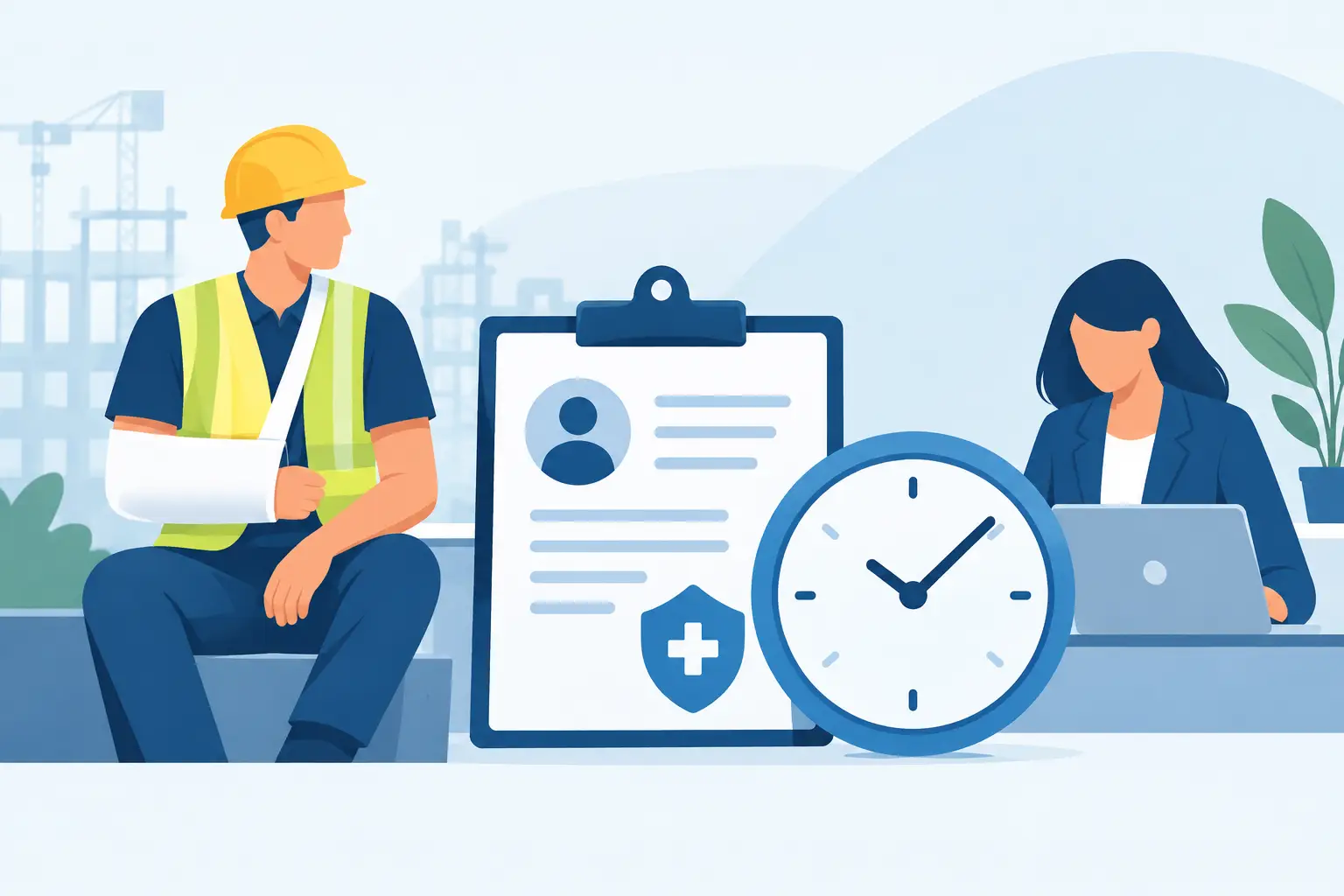
    A claim can begin to lose momentum before the injured worker leaves the worksite. A late incident report, an unclear account of what happened, or a worker who does not know where to seek care can create days of avoidable inactivity. Knowing how to prevent claim delays requires more than faster administration. It requires a claims operation built to make timely, informed, human-centered decisions from the first report through return to work.

    In workers’ compensation, delay is rarely a single failure. It is usually the accumulated effect of missed handoffs, vague expectations, incomplete documentation, and communication that arrives after anxiety has already taken hold. The operational consequences are substantial: treatment may be postponed, recovery can become more complicated, return-to-work planning stalls, and attorney involvement becomes more likely.

    Start With Immediate, Usable Injury Reporting

    Speed matters, but usable information matters more. A first report of injury submitted quickly but missing the mechanism of injury, body part, work status, witness details, or accurate contact information often creates a second round of outreach. That is not an efficient claim intake. It is a delay disguised as activity.

    Employers should give supervisors a clear reporting protocol and practice it before an injury occurs. The protocol should establish who receives the report, what information must be captured, how the worker receives care instructions, and when the claim is transmitted to the carrier or TPA. For organizations operating across locations or states, the process must also account for jurisdiction-specific requirements without leaving frontline managers to interpret rules on their own.

    The goal is not to turn a supervisor into a claims professional. It is to ensure that the first notice creates a reliable starting point for the professionals who will manage the claim.

    Make the First Conversation an Intervention

    The initial contact with an injured worker is one of the most consequential moments in the life of a claim. A prompt, respectful conversation can reduce uncertainty and establish realistic expectations about treatment, wage benefits, claim investigation, and return-to-work options. A delayed or purely transactional contact can have the opposite effect.

    Claims professionals should explain what happens next in plain language. The worker should understand who is handling the claim, how to reach that person, what information may be needed, and what to do if symptoms change or an appointment is missed. Avoid promising outcomes that depend on investigation, medical evidence, or state law. Instead, commit to specific next steps and follow through.

    Empathy is not an optional courtesy in this exchange. It is an operational capability. A worker who feels heard is more likely to share concerns early, respond to requests, and participate in recovery planning. That can reduce friction without compromising appropriate investigation or claim controls.

    Coordinate Medical Care Before Gaps Become Complications

    Medical delays commonly arise when authorization questions, provider availability, transportation barriers, and unclear work restrictions are handled as separate issues. The injured worker experiences them as one problem: care is not moving forward.

    Effective coordination begins with identifying the immediate medical pathway. Depending on the jurisdiction and employer program, that may involve an occupational clinic, a designated provider network, emergency care, or employee choice of provider. The claims team must communicate the applicable process clearly and document it accurately. Confusion over provider direction can generate avoidable disputes and missed appointments.

    Once treatment begins, the claim professional, nurse case manager when appropriate, employer, and provider office need a disciplined exchange of information. The focus should be functional recovery: diagnosis and treatment plan, current restrictions, next appointment, barriers to attendance, and anticipated work capacity. Medical privacy requirements still apply, so communication must be purposeful and limited to information necessary for claim and return-to-work administration.

    Do not treat every claim the same way. A straightforward injury with stable restrictions may need light-touch coordination. A complex injury, comorbid condition, language barrier, or behavioral health concern may require earlier nurse involvement and more frequent outreach. Whole-person recovery means recognizing that a delayed appointment may reflect transportation, fear, caregiving demands, or misunderstanding, not simply noncompliance.

    Build Return-to-Work Into the Claim From Day One

    Return to work should not begin when a worker reaches maximum medical improvement. It begins when the organization asks, early and credibly, what work can be performed safely within medical restrictions.

    Employers need a current inventory of transitional and modified-duty options. If no one can identify meaningful work when restrictions arrive, the claim can remain off work longer than medically necessary. That increases indemnity exposure and may distance the employee from the workplace at precisely the time connection matters most.

    A workable return-to-work process aligns three perspectives: the provider’s restrictions, the employer’s available tasks, and the worker’s functional capabilities. The offer must be clear, respectful, and compliant with applicable requirements. Sending a vague job description to a provider or presenting modified duty as punitive will not produce durable results.

    Create Clear Ownership at Every Handoff

    Claims delay often lives in the spaces between roles. The employer believes the adjuster is obtaining medical records. The adjuster assumes the provider office will send them. The worker believes someone else is arranging the appointment. No one owns the next action.

    Define ownership for the claim’s critical transitions: first report intake, compensability investigation, initial worker contact, provider communication, authorization review, wage calculation, litigation referral, and return-to-work coordination. Each task should have a named role, a service expectation, and an escalation path when the task cannot be completed.

    A practical workflow should flag at least these conditions for action:

    • no worker contact completed within the organization’s initial outreach standard
    • no treatment appointment confirmed after a reported injury
    • missing work status or restrictions after a medical visit
    • unanswered provider, employer, or worker communication
    • wage information needed to calculate benefits
    • a missed appointment, declined transitional-duty offer, or emerging dispute

    These are not merely diary entries. They are early warning signals that the claim may be drifting. Managers should review aging tasks and stalled claims by cause, not just by volume. If the same barrier appears repeatedly, the organization has a process issue to correct.

    Train for Judgment, Not Just Compliance

    Technical knowledge is essential in workers’ compensation. Claims professionals must understand jurisdictional requirements, compensability, benefit administration, medical management, Medicare Secondary Payer obligations when applicable, documentation standards, and the appropriate use of vendors. Yet technical knowledge alone does not prevent delays when a worker is confused, a supervisor is defensive, or a provider office cannot decipher the request.

    Training should therefore develop communication, expectation-setting, conflict navigation, and purposeful documentation alongside statutory and procedural expertise. The adjuster who can explain a pending investigation without sounding dismissive may prevent an avoidable escalation. The nurse case manager who recognizes a psychosocial barrier may help avert a missed treatment milestone. The supervisor who knows how to respond calmly after an injury may preserve trust at the outset.

    This is the central premise of whole-person recovery management: claim outcomes improve when professionals manage both the administrative claim and the human experience of injury. WorkCompCollege’s education model treats these capabilities as measurable performance levers, not soft extras.

    Use Data to Find Delay Patterns, Not Just Closed-Claim Results

    Lag time is useful, but it is only the beginning. Organizations should examine the intervals that shape the worker’s experience and the claim’s cost trajectory: injury to report, report to first contact, report to first medical visit, medical visit to receipt of restrictions, restrictions to modified-duty offer, and request to resolution.

    Segment the results by employer location, supervisor, claim type, jurisdiction, provider network, and adjuster workload where appropriate. The purpose is not to create a punitive scorecard. It is to identify where the system makes timely recovery harder.

    For example, a long report-to-contact interval may point to after-hours reporting gaps or assignment queues. Repeated treatment delays may signal provider access problems, unclear authorization procedures, or incomplete referral information. A pattern of delayed modified duty may reveal that managers need training and a better inventory of transitional tasks.

    The right metrics should lead to specific action. If measurement produces only a monthly dashboard, it will not change the next claim.

    Protect Speed Without Sacrificing Sound Decisions

    There is a trade-off worth managing carefully. Rushing to close an investigation, approve care outside established protocols, or issue an incomplete benefit decision can create compliance exposure and erode trust later. Preventing delay does not mean abandoning due diligence.

    It means separating what must be investigated from what can move forward now. A claim may require additional facts to resolve compensability while the worker still needs a clear point of contact, appropriate emergency guidance, and an explanation of the process. Likewise, a complex medical question may justify clinical review, but the worker should not be left wondering whether anyone received the request.

    The best claims operations combine urgency with discipline. They act quickly, document accurately, communicate plainly, and escalate barriers before those barriers become disputes.

    Every timely claim decision sends a message to an injured worker: your recovery is being managed with care, competence, and accountability. That message is not separate from financial performance. It is one of the ways stronger outcomes are created.

  • WorkCompCollege.com Launches First-of-Its-Kind Online Training for the New AMA Guides Sixth 2025 Edition

    Comprehensive course developed by internationally recognized impairment expert Christopher R. Brigham, MD

    LAKEWOOD RANCH, FL – October 13, 2026: WorkCompCollege.com today announced the official launch of its AMA Guides® to the Evaluation of Permanent Impairment, Sixth Edition 2025 Mastery Training Program, believed to be the first comprehensive, fully online, and self-paced training curriculum developed specifically for the American Medical Association’s most current version.

    Available through AMAguides.com, the program was developed in partnership with Christopher R. Brigham, an internationally recognized authority on impairment and disability assessment who served as Senior Contributing Editor of the AMA Guides Sixth Edition and for nearly three decades as Editor of the Guides Newsletter. Dr. Brigham also developed the Fifth and Sixth 2008 Edition Mastery Training programs acquired by WorkCompCollege.com earlier this year.

    Published digitally by the AMA rather than as a traditional printed textbook, the Sixth 2025 Guides incorporate evidence-based updates made since the original Sixth Edition was published in 2008. The AMA’s digital platform enables future revisions as medical evidence and clinical practice evolve. The Guides can be accessed at https://ama-guides.ama-assn.org/.

    “A new edition is only as good as the people trained to use it well,” said Mark Pew, Provost of WorkCompCollege.com. “We built this curriculum so professionals get both speed and rigor through Dr. Brigham’s expertise in how the Guides work and Dr. Buttar’s clinical oversight into how they should be taught.”

    The curriculum covers all 17 chapters and includes approximately 200 unique modules and over 20 hours of video content. The training program also includes comprehension quizzes, study guides, interactive learning resources, and vignettes to provide a rich learning experience.

    “Knowing where to find a table or formula is not the same as understanding how to perform a high-quality impairment evaluation,” said Dr. Brigham. “This training program is designed to help professionals understand not only how to apply the Guides, but the principles and reasoning necessary to produce accurate, consistent, unbiased and defensible impairment assessments.”

    The curriculum underwent extensive quality review led by Dr. Waqas Buttar, Medical Director of WorkCompCollege.com, with particular emphasis on clinical accuracy, usability and practical application.

    “Impairment ratings can materially affect an individual’s future and the resolution of a claim,” said Dr. Buttar. “Our QA process approached this curriculum with the same expectation we would apply to the evaluation itself: the methodology must be clinically sound, clearly communicated and reproducible.”

    While the AMA Guides are deeply embedded in U.S. workers’ compensation, their application extends internationally and across personal injury, motor vehicle, disability and other medicolegal systems. The new curriculum is available globally and on demand, allowing physicians, other qualified healthcare professionals, attorneys, claims professionals, and regulators to learn at their own pace.

    Learn more about the Sixth 2025 Digital Mastery Training Program at AMAguides.com.

    WorkCompCollege.com and its permanent impairment-related content – Impairment.com, AMAGuides.com, and CertifiedRater.com – are independent of the American Medical Association. The training program is neither endorsed nor sponsored by the AMA.

    About Workers’ Compensation Educational Services, LLC

    Workers’ Compensation Educational Services, LLC is the organization behind WorkCompCollege.com and a growing family of educational platforms dedicated to improving outcomes throughout the workers’ compensation system. Through online education, professional credentialing, conferences, publications, and industry resources, the organization serves employers, insurers, medical providers, attorneys, regulators, and claims professionals across the United States and internationally.

  • How a Workplace Injury Can Cause Loss of Identity During Recovery

    Key Insight: William’s story shows that a workplace injury can take away far more than physical ability. When an injured worker loses their routine, their role as a provider, and regular contact with their employer and adjuster, the loss of identity can weigh as heavily as the injury itself, and much of it can be prevented.

    How Workplace Injuries Affect Identity, Purpose, and Mental Health

    For most of his working life, William knew exactly who he was. He was the truck driver who took the extra shift. The one who picked up when another driver called out. The teammate other people leaned on.

    Then, in February 2023, a drunk driver struck his truck. William came out of the crash with multiple injuries. Within weeks, he went from working 60 to 80 hours a week to sitting at home with no schedule, no clear timeline, and fewer people calling.

    “I kept my head down a lot. I wasn’t used to sitting still. It was a very discouraging time.”

    A workers’ compensation claim is built to track physical recovery. What it often misses is the slower loss that follows an injured worker home: the loss of routine, of purpose, and of belonging. For William, that loss hit harder than he ever expected. And much of it came not from the accident, but from the silence that followed it.

    Meet William: A Truck Driver Whose Identity Was Built on Being Dependable

    William’s job kept him on the road and on the move. He regularly volunteered for overtime and made himself available whenever the schedule needed filling. He liked the full days, and he liked the people: the customers he met on deliveries, the coworkers he considered friends, and an employer he felt he had a great relationship with.

    He called himself a “team player,” and he meant it. “At work, I always made sure the guys knew I was there if they needed anything – an extra hand, a conversation,” he said.

    His work also made him a provider. William earned enough to support his family, including helping care for an ill family member. He described himself as an outgoing guy, rooted in faith, with a positive attitude he didn’t think could be shaken.

    The accident tested every part of that.

    How the Lack of Light Duty Affected Recovery

    William’s employer did not offer modified duty on site.

    “There’s nothing light duty about being a truck driver, and nothing was available at the warehouse or office, so I felt forced to sit at home.”

    So, he focused on the one part of recovery he felt he could control. He went to physical therapy regularly, believing that if he worked hard at healing his body, he would get back to work faster. But the weeks went on with very little progress. Frustration turned into uncertainty, and uncertainty turned into depression.

    Being home all day gave him time he didn’t want. “The more time I spent at home doing nothing, the more I had time to think,” he said. “And I questioned a lot of things – my sense of belonging being a big one.”

    The Financial and Emotional Weight of a Workplace Injury

    For William, being out of work wasn’t only about missing the job. It was about losing his ability to take care of the people who depended on him.

    “We had savings, but I needed to be able to continue to earn for my family, and I had no idea how long I would be kept from being able to do so. It caused a lot of stress.”

    Not knowing how long he’d be out made the financial pressure harder to carry, and he felt he had no one to carry it with. “I felt like I had no one to talk to about it, either,” he said. The man who had always made himself available to others found that no one was making themselves available to him. “No one was there for me when I needed them. It was shocking to me, and extremely isolating.”

    How Silence from Employers and Adjusters Affects Injured Workers During a Workers’ Compensation Claim

    Over time, William’s coworkers stopped checking in. His employer rarely called. When William reached out himself, he said he usually got an excuse or was sent to voicemail.

    “Getting hurt and taken out of work was eye-opening in ways I didn’t expect it would be … It just didn’t make sense to me.”

    He started asking himself a question many injured workers never say out loud: Why am I the one who has to reach out to them? Shouldn’t it be the other way around?

    The silence even changed how he felt about picking up the phone. He wondered whether his employer and adjuster were annoyed by his calls or ignoring him on purpose.

    “My intention wasn’t to be a burden. I really just wanted to know where I stood and maybe feel reassured that my job would be there when I got better.”

    That kind of worry has a measurable cost. In a study based on interviews with 3,200 injured workers across eight states, the Workers Compensation Research Institute (WCRI) found that workers who were strongly concerned about being fired after their injury were twice as likely to be out of work at follow-up (20% compared to 10%) and averaged about four more weeks of disability. Read a summary of the WCRI findings.

    For William, the silence reached beyond work. It made him question relationships he had never doubted.

    “I don’t like to admit it, but it was lonely. Here I thought I had all these people that cared about me – family, friends, coworkers, my boss – but their silence really said it all. And it made me wonder – was any of it genuine? I felt abandoned by the very people I cared about, and who I thought cared about me.”

    When Medical Care Feels Rushed and Questions Go Unanswered

    William’s medical care added to the uncertainty. He said his appointments felt hurried, and his concerns went unheard.

    “I didn’t feel like I was getting the care I needed. I felt like my doctor was always in a rush, didn’t really listen to how I was feeling, like he was distracted. And he’d just schedule another appointment, or another PT session for me, or another steroid shot. And I just didn’t understand that course of treatment when I told him I wasn’t feeling any better.”

    Sometimes, he said, he arrived at the office only to be told his appointment had been rescheduled.

    The question he most wanted answered was the one he never got a clear reply to. “I wanted to get back to work. And I asked every time I met with my doctor, but I never really got any straightforward answers or explanations,” he said. “And I’ve spoken to other people in the same situation as me, and that seems to be common.”

    How an Off-site Transitional Duty Assignment Through Transition2Work® Restored Routine and Purpose

    Three months after his injury, a light-duty offer arrived in William’s mailbox. No one, not his employer and not his adjuster, had called ahead or mentioned it might be an option. The offer was for an off-site transitional duty assignment with a local nonprofit through ReEmployAbility’s Transition2Work program, which provides modified-duty work in the community when an employer can’t accommodate restrictions in-house.

    After months without contact, an unannounced letter could easily have raised questions. William said his first feeling wasn’t hesitation. It was relief.

    “I was so discouraged for months that this felt like an answer to a prayer. I didn’t question it at all. It gave me a reason to get up in the mornings again. It gave me that meaningful routine that I felt I had lost. I got to interact with folks rather than sitting at home and having my head down. I got to realize that regardless of an injury, I was still capable of doing something.”

    The assignment reconnected him with people, including customers and staff who became friends, and gave his days a shape again. He no longer felt like he was drifting.

    It didn’t fix everything. His frustrations with his medical treatment continued, and so did the gaps in communication with his employer and insurance company. The assignment gave William purpose, structure, and a place to belong. It did not give him the answers or the check-ins he had been waiting for. His Transition2Work file closed in February 2026, three years after the crash.

    What Workers’ Compensation Professionals Can Learn About Identity Loss After an Injury

    William’s physical injuries were real, and his recovery from them was slow. But when he describes what hurt most, he talks about losing his routine, his role as a provider, and his belief that the people around him cared. Those losses didn’t come from the crash. They came from what happened, and didn’t happen, after it.

    Silence is not neutral. When an employer, adjuster, or provider goes quiet, the injured worker fills the gap, often with the worst possible explanation. William worried he was a burden. He wondered whether he still had a job. He questioned whether his relationships had ever been real. No one likely intended to send those messages, but the lack of contact sent them anyway.

    “No light duty available” shouldn’t mean “wait at home.” For workers like truck drivers, whose jobs can’t easily be modified, the absence of on-site light duty can leave them with nothing to do but wait. William waited three months, long enough for discouragement to become depression. When on-site modified duty isn’t possible, off-site transitional duty can offer structure and connection far sooner.

    Why an offer matters. William welcomed his light-duty offer, but it came by mail with no warning. For a worker who already feels forgotten, a quick call explaining what the offer is and why it’s being made can turn a letter into a conversation.

    Workers need answers about their timeline, even imperfect ones. William asked his doctor at every visit when he could go back to work. “We don’t know yet, and here’s what we’re watching for” is still an answer. Repeating the same treatment without explanation left him feeling unheard.

    Physical healing and emotional well-being move together. For William, fear, isolation, and loss of identity were not side effects of the claim. They were a central part of his recovery, and clear, consistent communication could have eased much of it.

    Key Takeaways for Claim Professionals, Employers, and Medical Providers

    • Don’t wait for the injured worker to call. Set a regular check-in schedule and start with a simple question: “How are you doing?”
    • Address job security early and plainly. If the worker’s job is being held, tell them. Worry about job loss is linked to longer time out of work.
    • Act quickly when no light duty is available on site. Explore off-site transitional duty early, before weeks at home turn into months.
    • Call before the offer letter arrives. Explain the assignment, why it’s being offered, and what the worker can expect.
    • Explain the treatment plan and give a timeline, even a range. When a worker says they aren’t improving, acknowledge it and explain the next step.
    • Watch for signs of isolation and depression, especially in workers whose sense of self is tied to being busy, dependable, or the family provider.
    • Help keep workplace connections alive. Supervisors can encourage teammates to stay in touch, so an injured worker doesn’t feel forgotten by the people they worked beside.

    William didn’t ask for much. “I really just wanted to know where I stood,” he said. For the professionals who handle his claim and the next one like it, that is a need that costs little to meet, and a great deal to ignore.

  • Work Restriction Communication Guide for Claims Teams

    Work Restriction Communication Guide for Claims Teams

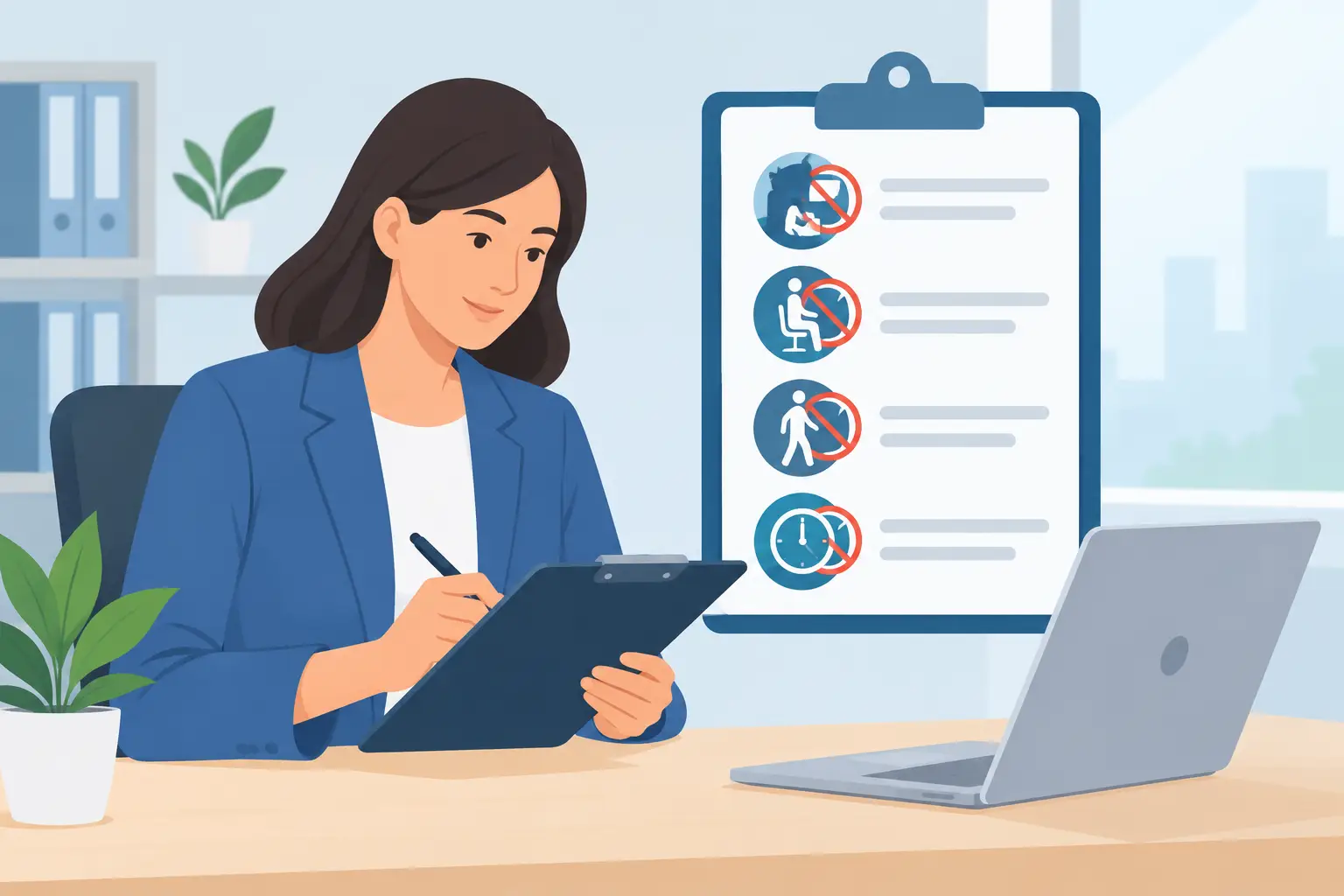
    A restriction stated as “no lifting over 20 pounds” is not yet a return-to-work plan. It is a clinical instruction that must be interpreted accurately, discussed respectfully, and translated into work that is genuinely available. This work restriction communication guide helps claims professionals, employers, and care partners make that transition without creating confusion, mistrust, or avoidable claim friction.

    Poorly communicated restrictions can quickly become operational failures. The injured worker may believe they are being pressured to work outside medical limits. A supervisor may assume a modified role is available when it is not. A provider may receive incomplete job information and issue restrictions that do not answer the practical question: what can this person safely do next? Each gap can delay recovery, increase attorney involvement, and weaken confidence in the claim process.

    Clear communication is not an administrative courtesy. It is a claims performance capability. When restrictions, job demands, and worker concerns are aligned early, teams can support safe work participation while preserving the dignity and agency of the injured employee.

    Why Work Restriction Communication Breaks Down

    Restrictions often arrive as brief notes with broad language: sedentary duty, light duty, avoid repetitive use, or no prolonged standing. Those terms may be medically meaningful, but they do not automatically map to a specific job, schedule, commute, production standard, or worksite condition.

    The problem becomes more acute when stakeholders communicate in isolation. The adjuster may focus on authorization and wage exposure. The employer may focus on staffing. The nurse case manager may focus on clinical progress. The worker may be managing pain, sleep disruption, financial strain, or fear of reinjury. A return-to-work discussion that addresses only one of these realities is unlikely to hold.

    There is also a meaningful distinction between explaining a restriction and directing an employee to perform work. Claims professionals should not reinterpret medical restrictions, make clinical judgments, or pressure a worker to exceed documented limits. Their role is to coordinate accurate information, clarify practical questions, and ensure that an offered assignment is consistent with the provider’s guidance and applicable jurisdictional requirements.

    The Work Restriction Communication Guide: Start With Precision

    Before anyone contacts the worker about modified duty, confirm what the medical document actually says. Read the restrictions in full, including duration, follow-up dates, treatment instructions, and any activity-specific limitations. Do not rely on a shorthand label in a claim note or a verbal recap from another stakeholder.

    If the language is ambiguous, seek clarification through the appropriate clinical or employer process. “Light duty” alone may not establish tolerances for lifting, sitting, standing, walking, reaching, driving, keyboarding, breaks, or environmental exposures. The goal is not to seek a more favorable restriction. The goal is to obtain a usable one.

    Next, compare restrictions to the essential and actual demands of available work. A job description can help, but it may not reflect how tasks are performed in the real environment. Ask the supervisor practical questions. How much does the work actually require lifting? Is seating available? Can tasks be rotated? Are there peak periods that change the physical demand? Is the worksite accessible within the restrictions?

    This comparison protects everyone. It reduces the risk of placing an employee in a nominally modified role that still requires prohibited activity. It also gives the provider more meaningful information if an updated work-status opinion is needed.

    Separate facts from assumptions

    A disciplined file note distinguishes documented facts from operational assumptions. Facts include the provider’s stated restrictions, the date they begin, the available tasks, and the employee’s reported concerns. Assumptions include whether the worker can tolerate a full schedule, whether a task is “easy,” or whether a concern is unrelated to the injury.

    That distinction matters when a claim becomes disputed. It also improves day-to-day decision-making. Teams can resolve an assumption with a focused question. They cannot responsibly treat it as evidence.

    Make the Worker Conversation Respectful and Specific

    The first conversation about restrictions sets the tone for the return-to-work process. A worker who hears, “Your doctor says you can work, so report tomorrow,” may reasonably feel dismissed, particularly if symptoms remain disruptive. A better approach communicates both the plan and the worker’s right to raise practical concerns.

    Use plain language. Explain the provider’s current restrictions, the proposed duties, the schedule, the location, the supervisor contact, and the date the assignment begins. Then ask whether there is anything about the assignment that appears inconsistent with the restrictions or creates a barrier to attending.

    A useful script sounds like this:

    > “Your current work status allows duties within the restrictions provided by your treating clinician. The employer has identified an assignment that includes [specific tasks] and does not include [restricted activities]. The schedule is [schedule]. We want to make sure you understand the plan and have an opportunity to identify any concern that should be addressed before you begin.”

    This language avoids two common errors. It does not promise that work will be pain-free, and it does not suggest the worker must decide whether medical restrictions apply. It invites information that may improve the plan while maintaining appropriate role boundaries.

    When an employee raises a concern, document it without judgment. “Employee reports increased symptoms with sitting longer than 30 minutes” is more useful than “Employee refusing modified duty.” The first statement identifies an issue that can be evaluated. The second can harden positions before anyone has determined whether the offer is workable.

    Give Employers What They Need to Execute

    Employers need enough information to build a compliant, sustainable assignment, but they do not need unrestricted access to medical detail. Communicate functional limitations and assignment requirements, not diagnoses, treatment history, or personal health information that is unnecessary for work placement.

    A modified-duty offer should be concrete. It should identify the position or tasks, reporting location, supervisor, hours, rate of pay when relevant, expected duration, and the process for reporting a change in symptoms or restrictions. Vague offers invite disagreement because each party fills in the missing details differently.

    The supervisor should also understand that modified duty is not a favor that can be casually withdrawn when the department becomes busy. If the job changes, the restriction analysis may need to change with it. A worker placed in temporary inventory review should not suddenly be assigned lifting tasks because the floor is short-staffed.

    This is where manager education has direct financial value. Supervisors who understand restrictions, confidentiality, and escalation protocols are less likely to create the kind of workplace interaction that turns a manageable claim into a contested one.

    Build an escalation path before it is needed

    A reliable process identifies who handles each type of problem. Clinical questions go through the appropriate provider or care-management channel. Job-demand questions go to the employer contact. Questions about benefits, authorization, or claim status go to the claims professional. Safety concerns require immediate workplace escalation.

    The injured worker should not be asked to coordinate these functions alone. Expectation-setting is a core form of support. Tell the worker who will call, when the next update is expected, and what to do if restrictions change between appointments.

    Document the Process, Not Just the Outcome

    A note that says “RTW discussed” provides little operational or legal value. Meaningful documentation records the restrictions reviewed, the job information considered, the details of the offer, the communication method, questions raised, and the next action owner.

    Consistency is especially valuable when multiple parties touch a claim. Standardized documentation reduces handoff errors and gives new team members a clear view of what has been communicated. It also reveals recurring breakdowns. If workers repeatedly report that modified-duty details were unclear, the issue may be a workflow design problem, not individual noncompliance.

    Documentation should remain factual and professional. Avoid characterizations about motivation, credibility, or attitude unless they are directly relevant, supported, and necessary. Claims files are operational records, but they also shape how every future participant understands the worker and the claim.

    Train for Judgment, Not Just Scripts

    Templates are useful, but they cannot replace professional judgment. A worker with a temporary lifting restriction may need a straightforward reassignment. Another may face a language barrier, transportation limitation, mental health strain, or a workplace relationship that makes a modified-duty conversation more complex. The right response depends on the medical facts, job realities, jurisdictional rules, and human context.

    That is why effective workers’ compensation education must integrate technical knowledge with empathy, active listening, conflict de-escalation, and expectation-setting. These are not soft extras. They are measurable operational skills that influence engagement, return-to-work continuity, litigation risk, and claim cost.

    WorkCompCollege’s Whole Person Recovery Method reflects this standard: recovery management is stronger when teams address the worker’s functional capacity and the conditions that affect whether a plan can succeed in real life. Organizations that train their teams to communicate restrictions with precision and respect create a more consistent experience across adjusters, nurse case managers, supervisors, and employer partners.

    The next restriction notice is an opportunity to demonstrate that consistency. Treat it as the beginning of a coordinated conversation, not the end of a medical appointment. When workers can see that the plan is clear, safe, and responsive to their actual circumstances, return to work becomes more than a claim milestone. It becomes credible progress.

  • How to Document Work Restrictions Clearly

    How to Document Work Restrictions Clearly

    A restriction that says “light duty” may sound helpful, but it does not tell a supervisor what work is safe, what work is prohibited, or how long the limitation applies. That gap creates operational confusion at the exact point when an injured employee needs clarity and a claims team needs a credible path back to productive work. Knowing how to document work restrictions turns a vague clinical recommendation into an actionable return-to-work plan.

    The documentation must do more than satisfy a file requirement. It should support medically appropriate work, set realistic expectations, protect the employee’s dignity, and give employers a reliable basis for evaluating modified-duty options. Done well, it also reduces avoidable disputes, unnecessary lost time, and the communication failures that can lead to attorney involvement.

    Why work restriction documentation affects claim outcomes

    Work restrictions sit at the intersection of medical care, employment operations, and claims administration. A treating provider may identify functional limitations, but the employer must translate those limitations into available work. The claims professional, nurse case manager, and risk team need sufficient detail to assess wage exposure, coordinate benefits, and monitor recovery progress.

    When documentation is incomplete, each stakeholder fills in the blanks differently. The employee may believe they cannot work at all. A supervisor may assign duties that exceed the restriction. An adjuster may be unable to determine whether temporary total disability remains appropriate. None of these outcomes serves recovery or cost control.

    Clear restrictions create a shared operating framework. They clarify what the employee can do now, what requires accommodation, and when the plan should be reassessed. That is not merely administrative precision. It is a whole-person recovery practice because uncertainty can increase fear, frustration, and disengagement during an already difficult period.

    How to document work restrictions in functional terms

    The strongest restriction documentation describes capacity, not just injury labels. A diagnosis may explain why a limitation exists, but it rarely tells an employer how to design safe work. “Lumbar strain” is clinically relevant. “No lifting more than 15 pounds; may alternate sitting and standing every 30 minutes; no repetitive bending or twisting” is operationally useful.

    A complete work status document should identify the employee’s current work capacity, the specific activities limited, measurable thresholds where clinically appropriate, the duration of the restrictions, and the next evaluation date. It should also state whether the employee is released to regular work, modified work, or no work.

    Specificity matters, but it should be medically supported. Overly restrictive language can unnecessarily remove an employee from work. Overly broad clearance can create safety concerns and undermine trust. The objective is not to produce the most restrictive note or the fastest release. It is to communicate the employee’s present functional ability accurately.

    Translate clinical limits into job-relevant language

    Work status notes are most effective when they address the demands that actually exist in the employee’s role or in available transitional work. Depending on the injury and job demands, this may include lifting, carrying, pushing, pulling, reaching, climbing, kneeling, walking, standing, sitting, driving, use of vibrating equipment, repetitive hand activity, or environmental exposures.

    Use concrete terms whenever they can be justified. Instead of “avoid prolonged standing,” document “standing and walking limited to 20 minutes at a time, with the ability to sit for five minutes between intervals.” Instead of “limited use of right hand,” identify whether the limitation involves forceful gripping, repetitive keyboarding, fine manipulation, overhead reaching, or a specific weight limit.

    Not every restriction requires a numerical threshold. Mental health conditions, concussion-related symptoms, medication effects, and pain-related pacing needs may require more individualized language. Even then, the note should identify the functional concern and the accommodation needed without disclosing unnecessary medical detail.

    Include an effective date and review point

    Restrictions without a time frame often become default work arrangements rather than active recovery plans. Every work status should state the date it takes effect and the anticipated duration or follow-up date. A reassessment date prompts the right questions: Has function improved? Is the transitional assignment still appropriate? Does the employee need additional support or a different accommodation?

    A scheduled review also prevents claims teams from treating an old note as a current clinical opinion. Recovery is not static. Restrictions should evolve with objective findings, treatment progress, job demands, and the employee’s reported functional experience.

    Separate medical information from work capacity information

    Employers need enough information to make a safe work assignment. They generally do not need a detailed diagnosis, treatment history, or unrelated health information. Claims professionals and employers should follow applicable state workers’ compensation requirements, privacy rules, collective bargaining obligations, and organizational policy when determining what may be shared and with whom.

    This distinction is especially important when communicating with supervisors. The supervisor’s role is to understand the approved work parameters, not to evaluate the legitimacy of the injury or request clinical details. A concise work-capacity statement protects privacy while giving operations what they need.

    For example, an employer-facing notice may state that the employee may work an eight-hour shift with no lifting over 20 pounds, no ladder climbing, and the ability to take a brief stretch break every hour. The medical record can contain the clinical rationale. Keeping those functions separate improves confidentiality and reduces the risk of inappropriate workplace discussion.

    Create a consistent documentation workflow

    Consistency across providers, adjusters, nurse case managers, and employer contacts is where many programs struggle. A well-designed workflow reduces variation and makes it easier to identify restrictions that conflict with available work.

    At minimum, the process should establish who obtains the current work status, where it is stored, who reviews it, how restrictions are communicated to the employer, and how acceptance or rejection of modified work is documented. It should also define escalation steps when restrictions are unclear, when a job offer may exceed stated limits, or when no suitable work is available.

    A standardized form can improve quality, but a form alone will not solve the problem. The people using it need training in functional language, expectation-setting, privacy boundaries, and respectful communication. A rushed request for “a full-duty release” can damage provider relationships and make an injured employee feel pressured rather than supported.

    WorkCompCollege’s whole-person recovery approach recognizes that technical documentation and human communication are connected. A precise restriction note has greater value when the employee understands the purpose of transitional work, knows whom to contact with concerns, and sees that the plan is designed to support recovery rather than simply reduce indemnity costs.

    Match restrictions to a legitimate modified-duty offer

    Documenting limitations is only half the process. The employer’s proposed work must actually align with them. A modified-duty offer should identify the job title or assignment, schedule, essential tasks, physical demands, reporting location, supervisor, rate of pay where required, and the effective date.

    Before extending an offer, compare each core duty against the current restrictions. Do not assume a sedentary job is suitable if it requires frequent twisting, extended driving, or repetitive keyboarding. Do not label work “light duty” unless the actual tasks have been reviewed. The assignment should be meaningful where possible, but meaningful work does not mean work that risks aggravation or disregards clinical limits.

    Document the employee’s response to the offer factually. Record whether the offer was accepted, declined, or requires clarification, along with the reason provided. Avoid conclusory language such as “uncooperative” or “noncompliant.” If the employee raises a concern that the job exceeds a restriction, investigate it. The concern may reveal an inaccurate job description, an unclear medical note, or an issue that can be resolved through adjustment.

    Common documentation failures to avoid

    The most frequent failures are vague terms, outdated restrictions, missing follow-up dates, inconsistent distribution, and notes that fail to distinguish between inability to perform the pre-injury job and inability to perform any work. Each failure can delay return to work and weaken claim decision-making.

    Another common mistake is treating the work status note as a one-way communication. Effective return-to-work coordination requires dialogue among the provider, employee, employer, and claims team within appropriate privacy boundaries. If an employer cannot accommodate a restriction, that information should return promptly to the claims and clinical team. If the employee’s symptoms change, the work status should be reassessed rather than informally modified on the shop floor.

    Jurisdiction matters as well. State-specific forms, statutory notice requirements, utilization review processes, and rules governing authorized treating providers can affect the documentation process. Organizations should build their workflow around applicable law and seek qualified legal or compliance guidance when a situation is disputed or unusually complex.

    A work restriction is not a barrier to recovery when it is clear, current, and connected to real work. It is a practical agreement about what safe progress looks like today – and a reminder that the best return-to-work programs treat employees as people with capacity, not simply claims with limitations.

  • The Litigation Reduction Equation: What Fewer Attorney-Involved Claims Mean to Your Loss Ratio

    Most claims organizations treat attorney involvement as a symptom. The worker hired a lawyer, the reasoning goes, because the injury was serious enough to justify one. That explanation feels reasonable. It is also, according to two of the more rigorous datasets in workers compensation research, only part of the story. A meaningful share of litigation is not driven by injury severity alone. It is driven by how the claim was handled in the first days and weeks after it was reported.

    What the reporting-lag data shows

    In 2015, NCCI actuary Thomas Sheppard published a study of workers compensation claims across 44 states, examining what happened as the gap widened between the date of injury and the date the claim was reported to the insurer. The pattern held across sprains, strains, fractures, contusions, and lacerations. Claims reported the same day carried attorney representation 13% of the time. Claims reported more than four weeks later carried it 32% of the time, nearly a two-and-a-half-fold increase. The same late-reported claims also showed a lower closure rate at eighteen months, a lower paid-to-incurred ratio, and a much heavier reliance on lump-sum settlements, which made up 59% of total cost for the latest-reported claims versus 31% for same-day claims.

    Sheppard and his co-authors were careful to note that this is a correlation, not a proven cause. I hold clinical evidence to the same standard, and I will not overstate this one. But a pattern of this consistent, across injury types and waiting-period structures, is not something a claims organization can afford to treat as background noise.

    What the claim-complexity data adds

    In 2024, the Workers Compensation Research Institute analyzed roughly 950,000 claims with more than seven days of lost time to isolate the effect of attorney representation on indemnity payments. Overall, 34% of these workers had an attorney. Representation raised total indemnity payments by an estimated $7,700 to $12,400 per claim. But the involvement rate was far from uniform.

    Claims resolved with temporary disability payments only, the simplest and most cleanly compensable category, carried attorney involvement of just 14%. Claims that combined permanent partial disability with a lump-sum settlement, the most complex and contested category, carried it at 79%. By diagnosis, spine sprains and strains sat at 36% attorney involvement. Neurological pain diagnoses, which are harder to explain, harder to resolve on a clean timeline, and more prone to disputed causation, sat at 61%.

    Read together, the two studies point to the same mechanism from different angles. Attorney involvement tracks ambiguity and delay, not just the severity of the underlying injury. A worker who receives a prompt, clear explanation of what is compensable, what happens next, and why, has less reason to seek outside representation than a worker whose claim sits unacknowledged, whose diagnosis is inconsistent with the mechanism of injury on file, or whose communication comes only after a dispute has already formed.

    The equation

    This is where training stops being a soft-skills conversation and becomes a loss ratio conversation. An adjuster who can recognize mechanism of injury, correctly match diagnosis to clinical presentation, and communicate a compensability decision within the first few days is not eliminating litigation. Some claims will always need an attorney, and some should have one. But that adjuster is narrowing the population of claims that drift into the high-representation categories by default, simply because no one closed the information gap early.

    Run the numbers conservatively. A mid-size TPA handling 5,000 lost-time claims a year, at WCRI’s baseline 34% attorney involvement rate, has roughly 1,700 represented claims annually.

    Reducing that rate by even three percentage points, through faster reporting discipline and more accurate first-notice communication, removes about 150 claims from the represented population.

    Applying only the low end of WCRI’s indemnity differential, $7,700 per claim, which is approximately $1.16 million in avoided incremental indemnity spend in a single year. That number does not require a change in fee schedule, a renegotiated network contract, or a shift in reserve philosophy. It requires adjusters and supervisors who understand what drives a claim toward representation and who are trained to act in it in week one, not week six.

    What does this means by role

    For a CFO, this is a loss ratio lever that does not touch the fee schedule or the provider network. It lives entirely inside claim handling discipline in the first thirty days. For a VP of claims, this is as much a defensibility question as a cost question. A file that closes an information gap early, before an attorney does it instead, holds up better under audit and reads more consistently across adjusters. For a risk manager tracking total cost of risk, legal and administrative expense is one of the more controllable pieces of that total, and it responds directly to how well the front line is trained to recognize claims heading toward complexity before they get there.

    None of this argues that legal representation is bad for the worker or the system. Represented claims often exist for good reason, and a fair claim handled fairly does not need to be an adversarial one. The point is narrower and more useful than that. A measurable share of litigation is a downstream effect of claim handling quality in the first days after injury, and claim handling quality in the first days after injury is a trained skill, not a fixed trait. That makes it one of the few levers in this business that a training investment can move directly.

    If you want to see how we teach adjusters and supervisors to recognize these early signals and act on them before a claim drifts toward representation, WorkCompCollege.com has course tracks built specifically around first-notice clinical triage and mechanism-based decision making.

  • The Workplace Violence Claim Nobody Saw Coming (But Someone Probably Did)

    The workers’ compensation industry is focused on responding to injuries. What if the most important work comp claim is the one we prevent from ever happening?

    That question was in my head while moderating the National Comp session “Before the Breaking Point: An Integrated Framework for Workplace Violence Prevention and Response” on September 29. Of all the great content included in the agenda, our session was the only one devoted specifically to workplace violence.

    At first glance, that subject might seem a little out of place at a work comp conference. It is reasonable to assume that workplace violence is a safety, security, HR, or law enforcement issue. And it certainly is all of those.

    Except when someone gets hurt and becomes a workers’ compensation issue. Maybe workers’ compensation needs to start thinking a little further upstream.

    That premise launched an excellent discussion with Ari Stowell (Corporate Director of Workforce Health & Safety at HCA Healthcare), and Dan Hanlon (Director of Training & National Account Development at The Noble Group). Dr. Ann Hawkins (Chief Innovation & Marketing Officer at Health Karma Inc.), who helped plan the session, had a schedule conflict and couldn’t join us.

    Dan spent 30 years in law enforcement before bringing that experience into workplace violence prevention. Based on his experience, serious incidents usually have a history. As Dr. Hawkins put it on one of our slides, “Workplace violence doesn’t begin with violence. It begins with warning signs.” Dan described those signs as increasing hostility, intimidation, threatening language, and talk of retaliation or harm, along with changes in behavior or attendance and substance abuse.

    Dan’s concern wasn’t whether somebody noticed those warning signs. It was what happened next, which he distilled into four questions:

    • What did we know?
    • When did we know it?
    • What did we do?
    • What did we document?

    Those are certainly important questions after something terrible happens. But they are much more valuable before they do. Dan mentioned the increasingly high cost of negligence and the evolving regulations around prevention and response that involve all four of those questions.

    Unfortunately, the numbers are moving in the wrong direction. We discussed how COVID was an inflection point for mental health and wellness. According to NCCI, nonfatal workplace assaults rose at an annualized rate of 5.3% from 2011 through 2022. The Bureau of Labor Statistics counted 470 workplace homicides in 2024, up from 458 in 2023.

    Dan said violence creates consequences beyond the person who is physically attacked. Coworkers witness it. Teams experience it. People may become afraid to return to the same environment. Psychological injuries can emerge alongside physical ones. Turnover, absenteeism, and morale can all be affected.

    To underscore his point, Dan described the November 2022 incident in Chesapeake, Virginia, where a supervisor opened fire in the employee break room and killed six coworkers. The subsequent lawsuits allege the employer knew about the shooter’s prior threatening behavior, that employees had reported him, and that nothing was done. Dan described a survivor who was seated next to a coworker who was shot in the head. He did not sugarcoat what that means for a claim. That’s not a typical recovery timeline. It’s a claim that may last a lifetime.

    Run that case through the four questions, and the answers are hard to read.

    Healthcare makes this particularly visible.

    Ari told us that HCA Healthcare has seen a dramatic increase in workplace violence since the pandemic. HCA employs approximately 320,000 people across a system of roughly 190 hospitals and thousands of other care locations. Most people do not manage workplace safety at anything remotely approaching that scale. But what HCA learned while trying to solve the problem at that scale can apply to every employer.

    Ari pointed out that, by her count, only 22 states currently have laws addressing workplace violence in healthcare. A review by Epstein Becker Green counted at least 20 as of March, so the list is growing fast. Dan pointed out that the mandates aren’t just for healthcare. California’s law reaches most employers, and New York has extended similar requirements to retail. In Dan’s opinion, California currently has the most stringent mandates and can be a good starting point for others. Whether or not your state requires a prevention program, the negligence lawsuits Dan described don’t wait for a mandate.

    Ari identified five challenges: standardization, visibility, accountability, culture, and ownership. When she asked which mattered most, the room guessed it: culture.

    Healthcare has historically tolerated a certain amount of violence as part of the job. When a patient is sick, confused, medicated, frightened, or elderly, it can be part of the culture that a behavioral health crisis is “understandable.” While those circumstances may explain behavior, they do not make an employee’s injury acceptable.

    That distinction matters far beyond healthcare. Every organization has things they simply learn to tolerate:

    • “That’s just how he is”
    • “She was angry”
    • “Nothing actually happened”
    • “We don’t want to overreact”

    Until something bad happens and “nobody saw it coming.”

    Interestingly, Ari said that when HCA made reporting easier and more consistent, its reported numbers initially went up. That wasn’t failure. It was visibility. You cannot manage what people are afraid, unwilling, or unable to tell you about.

    HCA eventually organized its approach around three pillars: people, process and technology:

    • People means leadership involvement, accountability, and culture
    • Process means standardized reporting, training, follow-up, and clear expectations
    • Technology means giving people practical ways to report problems, communicate quickly, and get help when something happens

    At HCA, that includes executive oversight and workplace violence committees at individual facilities. It includes centralized incident reporting that allows employees to self-report and automatically alerts the appropriate team. It’s even piloting wearable duress buttons that employees can activate when they feel unsafe or threatened. HCA chose a top-down approach in which leadership is financially incentivized to plan, document, and enact both proactive safety steps and quick response. Each year, facilities earn credits or are charged debits based on how their program is graded. Regardless of an organization’s size or industry, a whole-of-enterprise system will uncover and address blind spots while reducing resistance to engaging with red flags early. In the famous words of Barney Fife, “nip it in the bud.”

    Based on the insights from Dan and Ari, I noted five intentional things that every employer can do:

    1. Decide who owns workplace violence and make sure the answer is “all of us.” Security cannot solve this alone. Neither can HR, risk management, workers’ compensation, or safety. Someone needs responsibility for coordinating the program, but information must move across all organizational silos. At HCA, workplace violence prevention deliberately brings together leadership, legal, HR, employee health, behavioral health, security, patient safety, and other disciplines. While smaller organizations may have fewer people and departments, silos still exist. On this subject, those communication and coordination barriers must be removed.
    2. Give employees one obvious way to report concerns. If an employee sees troubling behavior, do they know where and when to report it? As importantly, do they have confidence that something will happen when they do? Reporting needs to be easy, understood, and trusted. Don’t measure success simply by fewer reports because, as Ari pointed out, sometimes more reporting means your reformed culture is working. As Dan recommended, offer a confidential or anonymous option for people who fear retaliation.
    3. Train people to recognize what happens before violence. Don’t limit training to what employees should do once an attack begins. Teach supervisors and employees to recognize increasing hostility, intimidation, fixation on grievances, behavioral changes, and threatening language. Then teach them what to do with the red flags that are identified. You don’t want to be the one who “never saw it coming.”
    4. Create a repeatable process for acting on information. A report without follow-up is just documentation, and the people who report it ultimately know if it’s a useful or useless exercise. Establish who reviews concerns, how risk is escalated, what corrective action is available, and how the response is documented. Periodically test whether the process works. This is very similar to an organization’s disaster recovery plan that looks good on paper but doesn’t work when a disaster happens.
    5. Learn from every incident, including the ones that almost happened. Don’t close the file when the immediate danger ends. Ask what was known beforehand. What worked? What did not work? What communication succeeded or failed? What should change? The goal isn’t simply to recover from an event. It is to make the organization stronger because of what it learned.

    To quote one of the most provocative slides: “Workers’ compensation isn’t only about paying claims after harm occurs. It’s about reducing frequency, severity, duration, and exposure.”

    We talk constantly about injury prevention, ergonomics, slips and falls, fleet safety, safe lifting, and return to work programs. After preparing for and delivering this session, I’d argue that workplace violence belongs in that same conversation. Perhaps the artificial line between prevention and workers’ compensation deserves to disappear.

    So, ask yourself: If someone at your company started showing these warning signs tomorrow, would anyone notice? Would anyone report it? Would anything happen if they did?

    If your honest answer to any of those is “I don’t know,” that’s your first finding. Someone will eventually ask Dan’s four questions. The only choice is whether it happens before the incident or after.