WorkCompCollege – Workers' Compensation Certifications

Blog

  • Elevating the Standards of Workers’ Recovery: Employer Style

    With buzz surrounding the advocacy-based claims model and focus on workers’ recovery, employers are often not sure where to begin. Here are three simple steps to improve your workers’ compensation program starting today.

    1. Acknowledgment. Acknowledge the injury, especially if it is unquestionable. Please pause for a moment before you continue reading and take yourself to the 20,000 foot view. You are not admitting fault… you are acknowledging something transpired…something happened. There was an event that occurred. Now, let us move on together.

      People want to be acknowledged, heard, and know that someone is listening. This is especially true at the employer level. The employer level is the first stop on an injured workers’ journey. How an employer responds during this time is critical. Whether you agree or disagree with the injury, how it transpired, or what the root cause is, this is a critical moment of what comes next. Pausing to let the injured worker tell their story and allowing an area they can be heard starts positive momentum in the process. This is not the time to judge. If you believe there are red flags, tell your employer or TPA so they can take the necessary investigative steps and leave you out of it. Take this time with the injured worker and create a space of non-judgement, and simply allow another human to be heard. Open the conversation by asking “How are you?” and then leave it there.

      Injured workers’ can be fearful in reporting injuries based upon the culture of the organization. What does your culture look like? Do you operate in a fear-based environment? Take a moment to reflect on your perspective and your employee’s perceptions. They may not be the same.

      For injuries that are not questionable, consider changing your work environment and culture you have in place. With an injured worker who sustained a traumatic injury, consider sending dinner home the night of the injury. It acknowledges that the injury occurred and helps establish the caring nature of an employer expressing concern for their employee. “We are sorry you had a tough day. Hoping this will make it easier.” Flowers can also be used post-surgery to let the injured worker know that you are wishing a speedy recovery and care enough to make an effort.

      Cards are the least expensive avenue to acknowledge an employee’s injury and when sent appropriately, help with the relationship building piece during the workers’ compensation process. The simple act of sending the injured worker a note wishing them a speedy recovery can make a big difference from a care, compassion, and concern approach. Notes do not have to be elaborate, simply short, sweet, and to the point. In an era where technology is at the forefront, taking pause to hand write a note to an employee letting them know you care can impact the relationship between the injured worker and the employer. Having this come from the direct leader is even more meaningful.

      While these things seem small, the cost of $20 to send dinner or a bouquet of flowers can really affect the outcome of this injury.
    2. Communication. How often do your organizational leaders get together to discuss workers’ compensation? It should be happening annually if not more frequent. Anyone who is a leader of people should be aware of what to do when one of their team members sustains a workplace injury. What should be discussed with the leadership team? Let’s start with the following:
      • One Touch. Make a personal contact with your injured worker at least once a week. This is found to be most impactful at the direct supervisor level which is why all leaders should be aware of what to do if an employee is injured. Keeping communication open helps avoid the emotional hijacking pitfalls that can come from silence from the direct supervisor. Engagement at the employer and employee level runs on a two-way street. Make the effort.
      • Face to Face. Nothing replaces personal interaction. Asking your injured worker to check in after medical appointments provides an opportunity to check in and bring the injured worker back into their work-life social circle. Having the opportunity to show care, compassion, and empathy in a face-to-face manner is irreplaceable.
      • Establish Connection. It is a team effort to restore injured workers’ heath, getting them back to work and back to life. Connecting with the insurance carrier (or TPA) and the adjuster in an open manner, creating a team approach assists with the building of trust with all parties. Presenting a unified approach with the objective goal of returning the injured worker to their life can improve communication.
      • Text. A simple and easy way to check in…it takes moments and provides a touch point of one human looking out for another. If an injured worker has a social circle at work, team members checking in can help with the sense of belonging and alleviate fears that co-workers are upset, no one cares about the injured employee, and that the employee is not wanted back with the employer. The fear of missing out at work can be concerning for some injured workers. Having their social circle reach out to check in can help resolve these fear-based emotions that can arise during the recovery process of a work injury.
      • Address Concerns. How are things going with the insurance carrier from the employee’s perspective? Do you have any questions you need answered? Does the injured worker? This can be an easy avenue to show a partnership approach with your Insurance Carrier or your Third Party Administrator. If something is not going well, you want to be aware to fix it or remedy the situation.
    3. Rethink Return-to-Work.
      • Stop focusing full-time work. For some reason, if employers are not able to offer at least four to eight hours of work, the idea of return to work is shoved to the side. We need to re-think how we approach return to work. Pull out to the 20,000 foot view and see the bigger picture of what is at stake. We are working with human livelihood. If we took opportunity to look at options surrounding one-to-two hours per week, the impact would be substantial. The injured worker needs to practice self-care to get themselves ready to come back to the work environment. They need to get themselves to work. They would be able to engage with their social circle, seeing their friends, colleagues, co-workers. They could check in with their supervisor, their human resources representative, and objective facts can formulate in the human mind. What just happened? The alleviation of emotional hijacking.
      • Emotional Hijacking. What many of us fail to acknowledge during this process is the impact the human brain has in telling a story of what is going on during the absence of an injured worker. When an injured worker has been removed from their employment, the human mind can play some not-so-fun tricks that determine the perception of others in their workspace. Bringing an injured worker back into their social environment at work can help alleviate these issues by establishing a sense of community and belonging back into the injured workers’ life. The injured worker gains perspective into the reality of belonging to a group, a social environment they have come to miss, and understands their place within the organization. Providing meaningful purpose to an injured worker during the healing process aids in the road to recovery. Challenge your program to start trying this with a couple of hours per week to focus on the bigger scope of human nature. It will make a difference.
      • Focus on Abilities. Many times return-to-work programs are focused on limitations and restrictions. Ask what the injured worker is able to do and what can be done to move forward in this process. Think outside the box, even if only for a couple of hours per day. What are some tasks that can be accomplished? Where does the ownership lie? Make sure there is accountability on both sides… the employer side of not asking the injured worker to perform work outside of their restrictions and on the injured worker side where they agree to not perform work outside of their restrictions.

    While three tips can be effective to improve workers’ compensation programs, they are only as effective as they runs deep. It is walking the walk…following up to follow through and make sure employees are taken care of during this time of vulnerability. Most importantly, always do what you say you are going to do. It is that simple. If you are going to call to check in with an injured worker on Tuesday, call them on Tuesday. If something is going south with the carrier or the TPA and you said you would check on it, did you? Doing what you say you are going to do establishes trust through accountability and is the single most important aspect when working with someone with an injury.

  • Why Psychosocial Issues Matter

    Let me take you back six months, or maybe 18-months… where we were hitting what was referred to as “the wall of the pandemic”, where people were feeling isolated and lonelier than ever. Remember when the holidays were over, and spring still felt like an eternity away? I remember those winters, where Mother Nature put forth an elongated winter, or so it felt, extending across a vast majority of the United States in ways we had not previously experienced. I remember feeling frustrated and remembered so many friends and family members were struggling to keep an optimistic viewpoint.

    I challenge you to think about what we experienced from the pandemic and think of it through the lens of an injured worker. Injured workers’ experience a lot of what we encountered emotionally through the pandemic such as isolation, loss of connection, lack of experiences, and loneliness. A person does not have to be alone to experience loneliness. People who feel isolated, alienated, abandoned, or just perpetually bored also experience loneliness. Many of us experienced this during the uncertainly of 2020 and 2021; and injured workers’ feel these emotions from the time they are injured.

    When someone is injured and it is a personal health condition, such as a person who injures their shoulder lifting weights or playing softball as an adult recreational activity, people show up to rally and help with daily activities from brining food to helping with transportation. Support is offered in a plethora of ways from family, neighbors, and colleagues. When the injury is slapped with the ‘workers’ compensation’ label, somehow, the story changes.

    In our minds, we somehow separate personal injury versus workers’ compensation. Personal injury is given support from a plethora of avenues and workers’ compensation is somehow given a plague like sticker people do not want to address, acknowledge, or be involved. The community, support, and simple acknowledgement needed for some reason, do not exist to the extent of a non-work related activity when an injury occurs from work. The stigma carries heavy weight as the ripple of people impacted is felt much further that the injured worker themselves.

    With the social treatment of injured workers being vastly different than a ‘standard’ human injury, is it any wonder people with the same injury, regardless of mechanism, have different outcomes? What goes into an injury that creates differences in the healing process? Let us look at a relatively common diagnosis in workers’ compensation, low back pain. Many injured workers will have a short treatment period. There will be moderate use of prescription drugs and physical therapy. Return-to-work will be prompt and there will be a smooth recovery with limited future problems for the injured person.

    While many injuries workers will experience the above, there will some injured workers who do not have the same outcome with a diagnosis such as low back pain. These injuries will seem to have an injured worker over treat, use a heavy amount of prescription drugs, and the injured worker will appear to magnify their pain. An appearance may manifest surrounding a lack of motivation or persistence to get better exhibited by the injured worker. As it relates to work and the injured worker’s behavior, a passive or resistance to recovery and return-to-work may also be present.

    Why? Why is there such a difference with the same diagnosis and relatively similar circumstances? This is where we need to dig deeper and shift our focus to psychosocial issues. Psychosocial issues matter.

    Recovery is not simply that of an injured body part attempting to repair and heal. When working with an injured human, the entire person is involved. This includes the mental, emotional, and psychological components that make us human, not simply the physical aspect of having pain in the lower back from the example above. A multitude of elements play into the whole person who has been injured and this whole person needs a plan encompassing of these elements to get better on the road to recovery.

    Psychosocial issues are sometimes identified in the workers’ compensation system as High Risk Factors. We all have them; however, when you have been injured, they can prevent or create challenges around the healing process. These psychosocial behaviors can be life style choices, life events, and other high risk characteristics. They are not comorbidities which relate directly to a medical health condition.

    Fear is a common emotion attached with injury and when someone enters the workers’ compensation system because there is a lot of unknowns. From pay to medical treatment, to job security and family dynamics, there are a lot of unknowns with what happens throughout the process as well as what life will be like after recovery. This matters because fear is debilitating. People tend to freeze and fail to move forward with feeling the emotions associated with fear.

    Marital issues play into the recovery process. Human injury can change the dynamics of a relationship, not only with a spouse but one with children. If issues existed previously, these can be amplified during this time of uncertainty. The nuclear family can be helpful during the recovery process; however, if they are too helpful, this can be just as damaging as if there is no support system, creating greater challenges.

    Financial issues arise when there are unclear expectations and parameters set upfront when a claim occurs. Workers’ compensation is financially dependent upon statues set forth by each state jurisdiction. Many times, injured workers are ill informed about who is paying what and how much they will receive. This is amplified with commercials from attorneys who create the fascade there is a big pay out in the workers’ compensation arena. Benefits are state mandated and set forth by specific statute language. This misconception put into our media makes it challenging to help an injured worker understand what they qualify for and that makes it imperative the adjuster as well as the employer, explain the process, timeline of benefits, and exactly how they are calculated for an increased awareness around expectations. The timeline of when an injured worker will be paid and by whom is imperative to be communicated up front so all parties understand. Communicating this to an injured worker through multiple mediums will assist in making sure the information shared is consumable. Walk the injured worker through their benefit calculations and then follow up with an email to show how the benefits were calculated. The transparency and notification for timing purposes will be well received.

    Other financial issues the industry fails to take awareness to surround medical bills. There are times where a medical facility will not have the appropriate information needed to bill the workers’ compensation carrier and a bill will be sent to the injured worker at their home residence. What people fail to recognize during this time period when the injured worker receives the bill is that the appearance, without explanation, is that the insurance carrier is not covering this treatment. The reality is that there may have been a medical bill mix up and workers’ compensation was the secondary insurance listed versus the primary. Adjusters should be clear, with the employer and the injured worker, to notify them immediately if a bill is received. Collections companies are not fun to deal with in this space or ever and it adds fuel to the fire of the workers’ compensation industry when they choose to go after an injured worker due to a breakdown in communication. Make sure the injured worker knows to tell someone if a medical bill or a notice is received!

    Anger can be a reaction from injured workers throughout the process. It is important to dig at the source of these feelings and emotions because they can give you an insight in how to help during the recovery process. For example, if an injured worker has anger towards their direct leader or their company, explore why this exists. It can be helpful for the injured worker to feel heard as well as find a way for the employer to be involved. One of the most valuable and cost-effective things an employer can do post-injury is have the direct leader of the injured worker call or shoot a text within the next 48-hours post injury to simply check-in. Anger tends to be felt towards employers for their lack of care and concern whereas anger tends to be felt towards adjusters when adjusters fail to be accountable and let items fall through the cracks such as returned telephone calls, payments being issued, and authorizations completed timely. All of these items previously mentioned are within the scope of control of the involved parties, cost nothing to complete, and make all of the difference with an injured worker.

    Substance abuse and addictive behaviors can be a very large inhibiter of the healing process and if an injured worker has these types of characteristics present, assistance may be needed. This is where the team approach with the employer, adjuster, and a nurse case manager can be helpful to identify the behaviors to form a plan to navigate these challenges. While substance abuse is not related to the work injury, it has a drastic effect on the injured worker’s mental capacity to navigate the space and can inhibit healing of their body. Having a nurse case manager involved for these type of issues can allow for further communication with the injured worker and the medical provider to formulate a plan and adds another layer of accountability throughout the claims process.

    Entitlement mentality is an interesting avenue to navigate. Verbiage is important, especially when looking at this issue. If someone is injured in a compensable manner, meaning their injury arose in the course and scope of their employment, they qualify for benefits outlined by the state of jurisdiction. Punitive damages are not involved in workers’ compensation as workers’ compensation benefits are inclusive of medical treatment and indemnity benefits. Many people fail to recognize this or explain it in a manner consumable for both the employer and the injured worker to understand which sets unrealistic expectations. The ideal of entitlement can then manifest itself into soft-fraud where the injured worker takes advantage of a system they feel failed by increasing claims cost and healing time as a result. Clear expectations of what an injured worker qualifies for must be outlined immediately for transparency in the process.

    Stress, depression, and anxiety have become a new state of living in our world during the pandemic. We are isolated and unsure when the world will return to a normal state leaving people feeling uneasy, high anxiety, and depressed for the future. Injured workers’ feel like this post injury. There is added stress not only around financials of learning where their pay will come from, how it is calculated, who is paying, and when, there is also a loss of commodore with peers, friends, community, and sometimes family. An injured worker can feel as though they are losing pieces of their identity during this time making it more challenging to focus on recovery during this process.

    Why do psychosocial issues matter? They are driving forces behind delayed healing, increased claims cost, and poor outcomes. We can take a pro-active approach to an injured workers’ psychosocial issues by proper communication, expectation setting, and taking a sports mentality approach to getting someone back to work, back to life. Taking the time to outline roles and responsibilities with check points along the way holds all parties involved accountable for the recovery involved with the injured worker. Here is what your adjuster will do, here is what your employer will do, and here is what the injured worker will do. Set expectations and follow up to follow through so the accountability withholds through this relationship along the road to recovery.

    Psychosocial issues matter. We should all come to the table to get the injured worker back to their life. Set realistic expectations, front-load communication, do what you say you are going to do, and improve employment practices. We can all do our part to improve the relationships in the workers’ compensation space to make each day and each counter better for one another. We can enhance the engagement of the injured worker or deplete it. We should all do our part to make the workers’ compensation industry a little more human by taking the time to identify the factors that could make the greatest difference.

  • Why Workers’ Recovery?

    The workers’ compensation industry needs a serious pep talk. Many have lost sight of the original intent of workers’ compensation, to take care of the injured worker. When messaging is added in from the outside world, it appears that everyone is against the injured worker or out to get them, especially the big bad insurance companies. While many of us know this is not the reality, messaging has substantial impact. People see the insurance world as a contractual and somewhat dark place. The workers’ compensation industry is well established and is thought of as a dreary, difficult, and undesirable system. This cultivates feelings of distrust and overall skepticism when parties collaborate after an injury occurs.  

    In reality, insurance was created to restore the livelihoods of people, and workers’ compensation to restore the livelihood of injured workers…getting them back to life. But insurance companies are not the only part to the system. There are many players that have an ability to impact this space: insurance carriers, TPAs, employers, friends and family, medical providers, attorneys, nurse case managers, etc.

    What can someone do to change this space? From my perspective, it takes someone who cares, and believes that you can change the system. It is my goal to share this vision with others to cultivate change through execution, implementation, and simply making it happen!

    The industry. There is a need in this industry for a recovery unit mindset – taking this black and white type of worker’s compensation and changing it into a colorful outlet to restore the livelihoods of those who have been injured. Being in the business of worker’s compensation not only involves state mandated benefits pertaining to medical treatment and lost time, but we work with people, emotions, and their daily lives. Our job is to indemnify people and restore them through the road to recovery, making them as whole as we can. This differs from other lines of insurance because of the nature of the human body and the impact this has on an injured workers’ purpose or contribution to life. When someone is injured at work and is removed from their employment, temporarily or permanent, they can lose their sense of purpose and feelings of accomplishment through task based work. Where do you begin? How can we assist in these barriers? What else can we do? How can we make the process better? How can we take the laws and direction given through jurisdictional mandates to improve overall experience?

    The ‘why’ has always been an important aspect of change management. At Continental Western Group, a Berkley Company, we founded, executed, and implemented the first ever Workers’ Recovery Unit (WRU) in 2018. The WRU was founded with a new mindset based upon the belief that we (as individual contributors) have the power to positively impact people’s lives each and every time we interact with an injured worker. The WRU focuses on recovery, taking the dreary and changing it to positive, and helping people learn to help themselves. Some may call this the advocacy model which has been talked about for the last few years, we chose to add more flair focusing on the support system mentality, then executed and followed through with doing what we said we were going to do. This continues today and was also a heavy foundation for the NARS – Workers’ Compensation Center of Excellence in 2021.

    There is a need for this, not only at one insurance company, but with all of those companies that touch workers’ compensation. This includes the employer level. Open your eyes and take a look at the industry…even personal healthcare is becoming grey and unhelpful to those who need it. It is time to change insurance for people and the impact within our own scope of control is how we do it. Treating people with kindness, respect, and through education is how we can make injured workers’ recoveries smoother, more effective, and more efficient.

    Insurance Carriers/TPAs. Attitude is felt on the phone through tone! Insurance Companies and TPAs have an impactful power starting at the adjusting desk. The initial contact made by an adjuster holds much power as this is going to set the tone for the claim. Speaking with kindness, providing no more than three bullet points with a check for understanding, and explaining a lot of the unknown factors ahead can lay the foundation for a successful relationship on the road to recovery. By simply starting conversations with ‘How are you?’ and waiting to actively listen can have substantial benefits in forming a bond with the injured worker. Working kindly is so important in this industry and can have a substantial ripple effect.

    Set realistic time frames and expectations. The more you can explain the claims process along the way, the better understanding the injured worker will have because you are walking them through the experience.

    Do what you say you are going to do, simple enough…execution and follow through are where adjusters find themselves in trouble. If you inform Joe you are going to call him at 3pm on Wednesday, call Joe at 3pm on Wednesday. This establishes credibility through accountability and ownership of your word. It builds trust!

    Cultivate a vision at the very first call. What does a successful recovery look like for the injured worker? Focus on the ultimate outcome and assist the injured worker with focusing on that recovery aspect rather than the painful situation they find themselves presently situated. If the injured worker is off work, start the conversation of returning to work the first contact focusing on the aspect of recovery.

    Explain benefits in a multitude of ways, and then follow up in writing. Having a couple different avenues of communication available helps reiterate the information you are communicating as well as provides follow up references. Transparency is key!

    Employers. Care about your employees, and let them know you care. Workers’ compensation was not designed to be an opportunity to correct poor hiring decisions. Regardless of your opinion of this person, they are an injured worker now in the workers’ compensation system. Our collective goal is to get this person back to work, and back to their life. Try to leave all opinions at the door and approach this as if it were a family member. Be genuine and authentic. No one likes to be injured. Being sincere is important when expressing care and compassion. It is important to remember that workers’ compensation injuries do not go from 8 – 5pm, or stop at second shift. The impact is 24 hours a day and can be felt through a family.

    Establish accountability at the onset of the claim. Lay out expectations for the injured worker such as having them check in with you after their doctor’s appointments so you are aware of their work status/restrictions. This also presents an opportunity for you to sincerely ask how they doing.

    Follow Up, especially if they are off of work. Send a quick text to simply check in and see how they are doing. Send a card and if that is not your style, make sure to send a text or call to check in. The absence of having an employer reach out to their injured worker can result in a plethora of ideas surrounding how much an employer does not care about someone. Bridging this gap with effort will aid in the injured worker feeling supported during this time of insecurity. Keep the injured worker in mind. If there is another company event going on during the time they are injured, is this an opportunity for inclusion? Possible upcoming meeting? Bring them in as they still want to be included.

    Communicate. There is power in communication. Work with your insurance carrier/TPA to ensure transparency for the most up-to-date information. Let the injured worker know that you are working in tandem and want to be included to ensure the road to recovery is optimal for the injured worker. This will assist in working towards the vision of returning to work and to life. Be warm and welcoming.

    How do you game-change an industry? Care…and believe you can. We should…and all of us can effectively change the workers’ compensation space to a positive light. Get ready, the time is now. We can change this space by each changing one element of the manner we work and interact in this space.

    Here is what you can do to make a difference:

    • Target your power of influence. Who can you help? Why are they important? Are you working directly with injured workers? Do you have influence at the employer level? Be specific and work with intent on who you can work with to bring effective change.
    • Influence them to help you. This is a great exercise to help injured workers’ focus on their recovery as well as an opportunity for an employer to improve their system through small changes. Think outside the box. What does success look like from their standpoint?
    • Teach people how to think. Verbiage is important. This is workers’ recovery; the goal is to restore the injured worker and focus on their abilities on the road to recovery. Remember these are injured humans, not claim numbers.
    • Challenge growth. Ask the right questions. What are you able to do? How can we work together to achieve recovery? What does recovery look like to you? How do we collectively get there? You will not be penalized for being gracious.
    • Role model the way and be the change. The world is changed by your example, not your opinion. Treat others the way you want to be treated. What example do you want to leave, and what will you do with your time here in the workers’ compensation space?
  • Words Matter…. But Don’t Overthink It!

    In a prior article, I wrote about “The Difference Between Workers’ Compensation and Workers’ Recovery ” and I said that words matter. They do, but as we consider what’s ultimately important, let’s not overthink it.

    “Workers’ compensation” or “workers’ recovery?”  To help answer this continuing question, perhaps we should first consider the history of our industry and where the term “workers’ compensation” likely started.  Workers’ comp laws replaced cumbersome, expensive and litigious tort systems as the means of compensating those seriously hurt at work.  So the name “workman or workers’ compensation” made sense at the time.  But, as I said before, many of us recognize that our industry needs to rebrand itself. We need to change the narrative so consumers of our services believe that we share their goal of returning workers and employers to productive lives and livelihoods after an injury.  But a “narrative” is just words – it is actions and behaviors that matter. How we engage workers and employers is where we can be guilty of overthinking the impact of words.

    Take the concept of a “workers’ recovery professional” certification: the name is a significant shift from the longstanding job titles of those who handle worker claims.  They (we) are often called claim managers or claim specialists or, heaven forbid, claim adjusters (a job title that I think is a discredit to our work).  As we wring our hands over the recruitment crisis in our industry, have we considered whether young workers who want careers in human-centered work will aspire to be a claim adjuster?  Or will their passion for helping others be better triggered by the idea of being a workers’ recovery professional?  In either case, a professional title doesn’t mean a lot unless those who hold the certification actually support workers through their healing to an ultimate recovery and return-to-work outcome whenever possible.

    Then there’s the debate about whether a more empathetic, customer-centric service model should be labeled worker recovery, claim advocacy, return to work, worker-centric, or something else.  But does it really matter?  The point of any of these terms is to message that the industry intends to and is changing.  That we are paying attention to current evidence and implementing best practices.  That we are engaging and activating workers and employers.  Again, that we reinforce work as part of the recovery process.

    Ultimately, when a worker is hurt on the job and needs our support, our coaching, our active listening, their behavior and outcomes won’t be influenced by the job title we hold.  They won’t focus only on recovery simply because the person they talk with is called a “worker recovery specialist” rather than a “return-to-work professional”.  What will matter is whether they trust us, whether we partner with them and their employer, whether we work to eliminate confusion and fears, follow through with our commitments, avoid unnecessary delays, and address their needs to the best of our ability.  

    No more rhetoric.  Actions will always speak louder than words.


  • The Point – Replay, Episode One – The Future of Workers’ Recovery

    Presented on November 3o, 2022, Hosts Bob Wilson and Judge David Langham discussed “The Future of Workers’ Recovery with Wilson’s co-founders of WorkCompCollege, Mark Pew and Donald Abrams.

    You may watch this full screen by clicking the icon in the right side of the video play bar.

  • The Point Webinar – The Future of Whole Person Recovery Management

    The Point – A Webinar Series

    Wednesday, November 30, 2022 @ 1:00 PM Eastern

    In this new webinar series from WorkCompCollege.com, Hosts Bob Wilson and Judge David Langham, who formerly hosted the popular “Hot Seat” webinar series, continue the tradition under a new banner!

    In this inaugural webinar, WorkCompCollege.com co-founders Mark Pew and Donald Abrams join Wilson and Langham to discuss how this new certification concept came to be, as well as the future of training and claims management in workers’ compensation. Join us as we get to “The Point.”

    The recorded webinar replay is now available here.

    Presenters:


    Judge David Langham
    Deputy Chief Judge
    Florida Office of Judges of Compensation Claims


    Bob Wilson
    President
    WorkCompCollege.com


    Mark Pew
    Provost
    WorkCompCollege.com


    Donald A. Abrams
    Exec. VP Business Development
    WorkCompCollege.com

  • WorkCompCollege Announces Preferred Medical as Gold Associate Partner

    Lakewood Ranch, FL – WorkCompCollege.com has announced Preferred Medical as a new Gold Associate Partner. Preferred Medical is a PBM and ancillary service provider focused on delivering high-quality tailored services to payors around the country. Because of their direct interaction with both claims personnel and injured workers, they see great benefit to those they serve by investing in their entire team with WorkCompCollege.com’s Workers’ Recovery Professional (WRP) Certification program.

    As part of the partnership, 30 Preferred Medical employees will go through the program to earn the WRP certification.

    Robert H. Wilson, president of Workers’ Compensation Educational Services, LLC, parent company of WorkCompCollege.com, says, “It is exciting to see a service provider recognize how their team can better serve their clients with a more comprehensive understanding of the industry viewed through a workers’ recovery prism. They believe, as we do, that developing stronger skills in a strategic manner will help optimize clinical and financial outcomes, in their case through enhanced customer service a better understanding of the ‘big picture’.”

    Amy Wrightsel, CEO of Preferred Medical, said, “We see the value of education to understand the whole process: how the process works from start to finish, what each person in the process experiences, and the legal, clinical, and financial influences on the process. We believe this education will allow our staff to more effectively work with everyone involved with an injured worker’s care. If we are more effective, then the overall care should be more effective, and we should all be striving for that!”

    For over a decade, there has been growing recognition of the need for change in the way injuries and illnesses that are the result of an occupational incident are managed. Cocooned in a highly regulated environment and driven by economic pressures, the workers compensation system (in many ways) has evolved into one that is process-driven, where the humanity of the people served is not often given proper consideration. This contributes to expensive litigation and unnecessary delays that cause stakeholder satisfaction to lack, along with situations that are needlessly expensive and often produce inferior results.

    Voices have been calling for better ways to manage claims and improve outcomes for injured employees. Different names and phrases have been used to define this idea – workers recovery, advocacy-based claims management, bio-psychosocial adoption, whole person care – but all center around the same critical realization. Treating the entire person, understanding the injured employee’s psychology and thought process, and employing clear, concise and consistent communication methods will improve clinical outcomes while reducing friction and cost. Simply put, restoring humanity to the process is a win-win for all involved.

    WorkCompCollege.com is a community-driven effort designed to address that situation and will help continue the trend towards lower costs and improved results through education, information exchange and mentorship.

    The base certification curriculum will be launched live at the SAWCA conference in Colorado Springs on November 17, 2022. State-specific, discipline-specific, master’s and other advanced programs are in the planning stages for development over the next year. In addition, the school will provide an alumni association for continuing education and community.

  • WorkCompCollege.com Announces Scholarship Availability for Kids’ Chance Recipients

    Lakewood Ranch, FL (November 9, 2022) – WorkCompCollege.com, which launches its innovative training and certification program for the workers’ compensation industry on November 17, 2022, has announced a scholarship program to benefit recipients of Kids’ Chance Scholarships across the nation. The company will fund a full tuition scholarship in their Workers’ Recovery Professional (WRP) Certification Program for any Kids’ Chance scholarship student who desires a career in workers’ comp. 

    “One of the biggest drivers behind the development of WorkCompCollege.com has been the desire to change the narrative surrounding workers’ compensation and attract new, young talent to our industry’s noble cause,” said Robert Wilson, president of parent company Workers’ Compensation Educational Services, LLC. “This is an opportunity to entice young people who have already experienced first-hand what can happen to injured workers and their families, and who will have a certain empathy for the situations they encounter as part of our industry.” 

    Kids’ Chance is a 501(c)3 program that provides scholarships and educational opportunities for children of workers seriously or fatally injured on the job. There are independent organizations in all 50 states, and a national umbrella organization, Kids’ Chance of America, Inc., to support their grassroots efforts. 

    Wilson, who is a founding board member and past president of Kids’ Chance of Florida, Inc., also serves on the board of Kids’ Chance of America, Inc. He says he has had the opportunity to meet many scholarship recipients around the nation, and that they all share a special trait. “These kids are tough, and they are committed,” he says. “They have learned at an early age that life can be unfair, but despite those circumstances have resolved to make a difference for themselves and their family. Many of them develop professional goals in line with what happened to their parent; often in the medical field or another community-oriented position. It would be ideal if we could influence some of them to come into workers’ comp and help us build a better system with improved outcomes for all.”

    This scholarship announcement coincides with Kids’ Chance Awareness Week, which is running between November 7-11. People wanting to learn more about the organization and its history may visit https://www.kidschance.org.

    A Scholarship application page will be available in early December. Qualified applicants need only be past or current Kids’ Chance scholarship recipients and express a desire to serve within the workers’ comp or broader insurance industry. 

    About WorkCompCollege.com
    WorkCompCollege.com is a community-driven effort to improve the workers’ compensation industry through comprehensive education infused with a whole-person recovery management mindset. The Workers’ Recovery Professional (WRP) certification is comprised of meaningful curriculum in nine schools: Claims, General Studies, Humanities, Legal, Medical Management, Regulatory/Legislative, Return to Work, Risk Management and Stakeholders. A diverse, (in)credible team of School Deans and Faculty deliver the courses in an asynchronous virtual campus environment. A service of Workers’ Compensation Educational Services, LLC and the brainchild of Robert H. Wilson, Donald A. Abrams and Mark Pew with advice and support from a distinguished Board of Trustees, this new educational platform is revolutionizing how all stakeholders within the system become more proficient, professional and passionate about their role in an injured employee’s journey to return-to-work. To learn more please go to WorkCompCollege.com.

  • Living Between Vegas and Seattle and Colorado Springs and Whatever This Live-Streaming Thing Is

    I have not written much in the last couple of weeks. It’s not that I don’t have much to say. In fact, I rarely “don’t have much to say.” It is just that the last few weeks have been extraordinarily busy, and I just haven’t found the time to pound out any of those words on the keyboard. 

    At least in some semblance of order anyone could understand.

    I have been extremely busy working on the business and technical end of WorkCompCollege.com. We’ve set a hard launch date (which I will tell you is November 17th, as long as you promise not to tell anyone else) and seem to be hurtling toward that deadline at a much faster pace than previously anticipated. In the midst of that, I have been traveling a great deal, as the post-pandemic conference circuit is quite alive and well. I was in Las Vegas most of last week for the National Workers’ Compensation and Disability Conference, and I fly to Seattle tomorrow to Keynote the Washington IARP “Fired Up For Rehab” Fall Conference. I will be in Colorado Springs in two weeks for the SAWCA All Committee Conference, where I get to once again conduct the closing session, “Things That Make Bob Go, Hmmm.” 

    In fact, it is from the SAWCA conference that WorkCompCollege.com co-founders and I plan to live stream our launch – as long as I can figure out that whole live-streaming thing. I’m packing two tin cans and some string as a backup, just in case.

    You can never be too careful.

    This summer has been a whirlwind, but it has also been an absolute joy. Working with Mark Pew and Don Abrams, along with dozens of extraordinarily qualified and dedicated people in building a better mousetrap for the workers’ compensation industry has been very rewarding. The workers’ comp community has stepped up and fully embraced our project, and it is clear to us that actual training in “whole person recovery management” is an idea whose time has come.

    But I do apologize for the relative silence from the Cluttered Desk. I am fully cognizant of the fact that you still have the right to my opinion, and it pains me that I may be violating those rights. I promise to do better.

    But probably not until November 18th.

  • WorkCompCollege.com Launches Virtual Athletic Program, Introduces Athletic Director, Scholarships, and “Flying Bull” Mascot

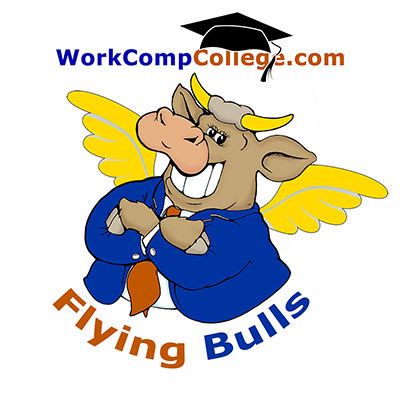
    Lakewood Ranch, FL (October 11. 2022) – The virtual education system WorkCompCollege.com today announced its new athletic program, naming Gary Davis as its Athletic Director. The school’s new mascot is the “Flying Bull.” A series of Athletic Scholarships have also been created to pay-it-forward for the school’s Workers’ Recovery Professional Certification.

    WorkCompCollege.com will offer 5 full WRP Scholarships every year to workers’ compensation professionals who played sports either in college or professionally.

    Davis, who has been more broadly known as the Executive Director of the Southern Association of Workers’ Compensation Administrators (SAWCA), will be responsible for overseeing all athletic programs for the school. He says, “I am excited at the chance to create this program from literally nothing. With the help of athletic scholarships, I expect all of our programs to dominate the virtual league.” Others apparently also feel that way, as Davis explains, “In fact, people have told me the WorkCompCollege.com Flying Bulls will probably be in a league of their own.”

    The school’s founders established the program because athletic competition requires focus, teamwork, and a broad understanding of the full playing field in sometimes stressful and competitive environments. Robert Wilson, president of WorkCompCollege.com explains, “Those attributes are representative of what is required for successful outcomes in workplace injury cases and are the same qualities we are striving for with the WRP program. It is a parallel that we want to build from.”

    Wilson was also pleased with the appointment of Davis, saying they are confident that “we will get everything out of what Gary puts into this.”

    The creation of the Flying Bull mascot was the result of initial friendly competition amongst some school Board of Trustee members, most notably fans of the Iowa Hawkeyes and Texas Longhorns. The color selections for the Flying Bull were drawn from a number of NCAA Division I teams, largely as a futile attempt to keep as many people happy as possible. Ultimately, the selection appears to be a hit. Robert Wilson says, “When people who know me learn about the Flying Bull, for some reason they seem to completely get it.” Gary Davis, when asked about the mascot, said, “Have you met these guys?”

    While the offered athletic scholarships are real, the WorkCompCollege.com Flying Bull Athletic Program is an effort to be “playful with a purpose” in highlighting the need for improved training methods that improve outcomes by focusing on whole person recovery. That said, there are some potential virtual events in the offing. Those interested are encouraged to watch for updates from the program.

    Applications for the Flying Bull Athletic Scholarship will be available in November, shortly after the WRP program is scheduled to be launched.

    For more information, visit www.workcompcollege.com.