
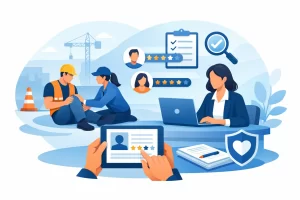
What AI Powered Claims Learning Changes

What AI Powered Claims Learning Changes

A claims operation rarely breaks because people do not care. It breaks because judgment develops unevenly, training is inconsistent, and the gap between policy knowledge and real claim behavior stays too wide for too long. That is why AI powered claims learning is getting serious attention in workers’ compensation. Not as a novelty, and not as a replacement for experienced professionals, but as a way to build stronger decision-making at…

Read More

How Claims Teams Build Trust That Lowers Costs

How Claims Teams Build Trust That Lowers Costs

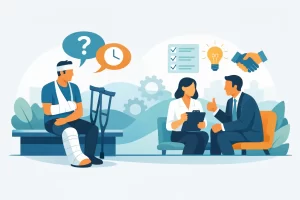
An injured employee usually decides whether to trust the claims process long before claim complexity shows up on a dashboard. It happens in the first call, the first explanation of benefits, the first missed callback, or the first moment they feel treated like a file instead of a person. That is why understanding how claims teams build trust is not a soft topic at all. In workers’ compensation, trust directly…

Read More

Workers Compensation Training Reviews That Matter

Workers Compensation Training Reviews That Matter

A five-star rating tells you very little if the training fails to reduce claim duration, improve injured worker communication, or prevent avoidable attorney involvement. That is the real problem with many workers compensation training reviews. They often reward convenience, presentation style, or course length, while overlooking whether the education changes claims behavior in ways that affect recovery, return to work, and total cost. For professionals inside the workers’ compensation system,…

Read More

Injured Worker Expectations Management That Works

Injured Worker Expectations Management That Works

A claim can start going sideways before compensability is even confirmed. The injured worker misses one callback, hears three different timelines from three different parties, and starts filling in the gaps alone. That is why injured worker expectations management is not a soft add-on to claims handling. It is a core operational discipline that shapes trust, treatment engagement, attorney involvement, return-to-work progress, and total claim cost. In workers’ compensation, expectations…

Read More

How to Onboard Claims Staff the Right Way

How to Onboard Claims Staff the Right Way

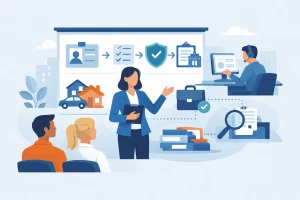
A new adjuster’s first 90 days can quietly shape claim outcomes for years. If onboarding is rushed, inconsistent, or limited to systems access and policy manuals, the downstream effects usually show up fast - missed contacts, uneven documentation, unnecessary escalation, delayed return to work, and preventable attorney involvement. That is why organizations asking how to onboard claims staff are really asking a larger operational question: how do we build judgment,…

Read More

How to Train Adjusters for Better Claim Outcomes

How to Train Adjusters for Better Claim Outcomes

A new adjuster can learn system navigation in a few days and jurisdictional basics in a few weeks. What usually takes far longer is learning how to make sound claim decisions while managing an injured worker’s experience, employer expectations, provider relationships, compliance obligations, and file economics at the same time. That is the real challenge behind how to train adjusters in workers’ compensation. Too many training programs still treat adjuster…

Read More

Why Claims Empathy Reduces Disputes

Why Claims Empathy Reduces Disputes

A claim can turn adversarial long before any formal dispute is filed. Often, the turning point is not a compensability decision or a medical report. It is the moment an injured worker decides, rightly or wrongly, that no one is listening. That is the real context for why claims empathy reduces disputes in workers’ compensation. Empathy is not a soft extra. It is a claims management skill that directly influences…

Read More

Workers Compensation Onboarding Program

Workers Compensation Onboarding Program

A new adjuster inherits 125 files, a nurse case manager is asked to document differently than in her last role, and a supervisor assumes both already understand jurisdictional deadlines, reserve philosophy, and what to say to an injured worker on day one. That is how inconsistency enters a claims operation. A workers compensation onboarding program is not a nice-to-have administrative step. It is the control point where organizations either standardize…

Read More

Straight Outta Workers’ Comp Podcast: Episode 24, Transitioning Into Workers’ Comp (Video)

In this episode of Straight Outta Worker’s Comp, co-hosts Bob Wilson and Mark Pew sit down with Chris Loveless, a Work Comp College WRP (Workers’ Recovery Professional) graduate who spent a decade in Utah law enforcement—including time on a SWAT team, a Metro gang unit, and as a K-9 handler—before transitioning into the workers’ comp industry, where he now works in business development at OneCall. The conversation traces his unusual…

Read More

Straight Outta Workers’ Comp Podcast: Episode 24, Transitioning Into Workers’ Comp (Audio)

In this episode of Straight Outta Worker's Comp, co-hosts Bob Wilson and Mark Pew sit down with Chris Loveless, a Work Comp College WRP (Workers' Recovery Professional) graduate who spent a decade in Utah law enforcement—including time on a SWAT team, a Metro gang unit, and as a K-9 handler—before transitioning into the workers' comp industry, where he now works in business development at OneCall. The conversation traces his unusual…

Read More