

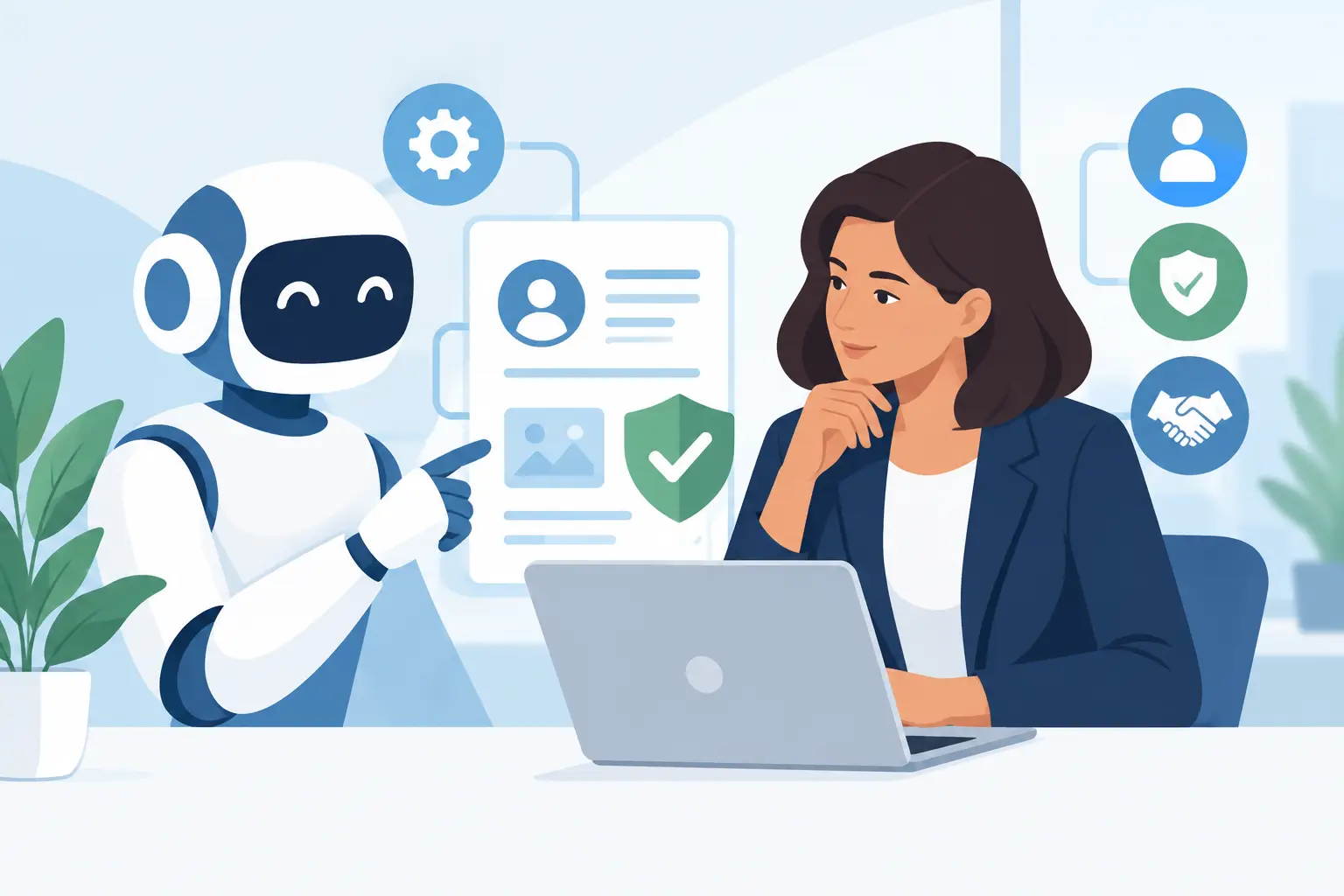
A claim can move through a workflow in seconds and still leave an injured worker confused, unsupported, and more likely to seek legal representation. That is the central tension in claims automation for workers’ compensation: technology can remove administrative friction, but it cannot replace the professional judgment that shapes recovery, trust, compliance, and return-to-work outcomes.
For carriers, TPAs, and self-insured employers, the question is no longer whether automation belongs in claims operations. It does. The more consequential question is where automation should lead, where it should assist, and where a trained claims professional must remain fully accountable.
What Claims Automation Can Do Well
Claims automation applies technology to repeatable tasks and defined decisions across the claim lifecycle. It may capture first notice of injury data, validate fields, route claims by jurisdiction or injury type, trigger correspondence, assign tasks, identify missing documentation, process routine invoices, or alert a supervisor when a claim exceeds an established threshold.
These functions address real operational problems. Claims teams often work across high volumes, fragmented systems, state-specific requirements, provider documentation, employer communication, and demanding timeframes. When routine steps rely on manual follow-up, quality can vary by workload, experience level, and individual work habits. Automation can create greater consistency in the work that should be consistent.
The business case is straightforward. Faster intake can reduce delays. Automated diary management can help prevent missed deadlines. Rules-based routing can place a claim with the right resource earlier. Structured data can improve reporting and identify patterns that leadership teams may otherwise miss. Each of those gains can support lower expense, stronger compliance performance, and a more disciplined claims operation.
Automation is especially useful when the task has clear inputs, established rules, and a low risk of harm if the system follows the rule correctly. A statutory notice deadline, a missing authorization form, or a duplicate invoice review may be appropriate candidates. The technology is not making a human assessment. It is reducing preventable administrative variation.
Where Claims Automation Requires Human Oversight
Workers’ compensation claims are not merely transactions. They are recovery events that affect a person’s health, income, identity, family obligations, and relationship with an employer. Those realities rarely fit cleanly into a decision tree.
An injured worker who does not return a call may be disengaged, but they may also be in pain, unable to navigate a portal, worried about retaliation, or unclear about what happens next. A delayed treatment appointment may signal noncompliance, or it may reflect transportation barriers, language needs, provider availability, or confusion about authorization. An automated system can flag the event. It cannot reliably interpret the person behind it.
This distinction matters because claims outcomes are shaped by what happens after an exception appears. If the response is a generic notice, an avoidable misunderstanding may harden into frustration. If a skilled adjuster or nurse case manager makes timely contact, sets expectations, listens carefully, and coordinates the next step, the same issue can become manageable.
High-impact decisions require more than data confidence. Compensability questions, reserve strategy, complex medical management, return-to-work planning, settlement evaluation, and attorney involvement all demand context. They involve jurisdictional knowledge, clinical considerations, employer realities, and communication skill. Technology may inform these decisions, but it should not obscure who owns them.
The risk of automating a poor process
Automation does not correct weak claims practices by itself. It can scale them.
If intake questions are incomplete, automated triage will distribute incomplete information faster. If correspondence is written in technical language that injured workers do not understand, automatic delivery simply expands the reach of poor communication. If escalation rules focus only on financial severity, the organization may miss psychosocial, workplace, or recovery barriers that later drive duration and litigation.
Before expanding automation, organizations should examine the process being automated. What decision is being made? What information is required? What assumptions are embedded in the rule? Who reviews exceptions? How is the worker’s experience affected? Those questions turn automation from a technology project into an operational design discipline.
Human Skills Are Performance Controls
In workers’ compensation, empathy is often treated as a personal quality rather than a professional capability. That view is too limited. Empathy, expectation-setting, active listening, and clear communication are performance controls because they influence behavior at critical moments in the claim.
An injured worker who understands the claims process is better positioned to participate in care and return-to-work planning. An employer that receives clear, timely direction can offer appropriate transitional work. A provider office that understands authorization requirements is less likely to encounter avoidable administrative delays. These are practical operational outcomes, not soft benefits.
Claims automation can create capacity for this work. When adjusters spend less time moving data, chasing routine documentation, or manually generating standard reminders, they have more opportunity to address the conversations that determine whether a claim stays on course. That capacity only produces value if professionals have been trained to use it well.
Organizations should therefore measure more than cycle time and closed-claim counts. Useful performance discussions also include timeliness of meaningful contact, clarity of claimant communications, return-to-work coordination, appropriate escalation, complaint patterns, and litigation indicators. Efficiency without relationship quality can create a misleading picture of success.
Building a Responsible Automation Model
A responsible model begins with claim segmentation. Not every claim needs the same degree of human involvement, and not every claimant needs the same communication approach. Simple, low-severity claims with stable facts may benefit from highly automated workflows, provided the claimant can readily reach a person when needed. Complex claims, catastrophic injuries, behavioral health concerns, disputed claims, and cases with prolonged disability require earlier and more deliberate human engagement.
The next requirement is governance. Claims leaders should establish who approves rules, how frequently they are reviewed, what outcomes trigger revision, and how staff can override an automated recommendation. An override should not be framed as a failure of the system. It is an essential safeguard when the facts do not match the model.
Data quality also deserves executive attention. Automation depends on accurate coding, timely documentation, reliable jurisdictional rules, and meaningful outcome data. Inconsistent data can produce incorrect routing, inappropriate communications, and false confidence in management reports. A sophisticated platform cannot compensate for unclear operating standards.
Finally, organizations need role-specific education. Adjusters need to understand when to rely on a workflow and when to investigate further. Supervisors need to recognize automation bias, monitor exceptions, and coach for judgment rather than simple task completion. Nurse case managers, employer stakeholders, and provider-facing teams need clarity about handoffs, documentation, and communication responsibilities.
Training Determines Whether Technology Delivers ROI
The strongest claims organizations do not position automation and professional development as competing investments. They treat them as connected investments.
A new system may standardize tasks, but it cannot teach an adjuster how to explain a difficult benefit decision with respect. It cannot teach a supervisor how to identify when a claimant’s anger reflects an unresolved concern rather than resistance. It cannot teach a team how to coordinate a return-to-work conversation that respects medical restrictions while preserving the worker’s dignity and connection to the workplace.
Those capabilities must be taught, practiced, observed, and reinforced. Formal workers’ compensation education should integrate technical claims knowledge with whole-person recovery management, communication, and expectation-setting. This is the premise behind WorkCompCollege’s specialized approach: better claims outcomes require both technical competence and the human skills that help injured people move through recovery.
The most effective implementation plans introduce automation with a clear operating philosophy. Technology handles repeatable work. Professionals own judgment, relationships, and exceptions. Leaders monitor both efficiency and recovery outcomes. Training gives every role a shared language for applying that philosophy consistently.
Claims automation is valuable when it gives professionals more time to do the work only people can do: interpret complexity, establish trust, coordinate recovery, and make accountable decisions. That is where faster workflows become better claims outcomes.