
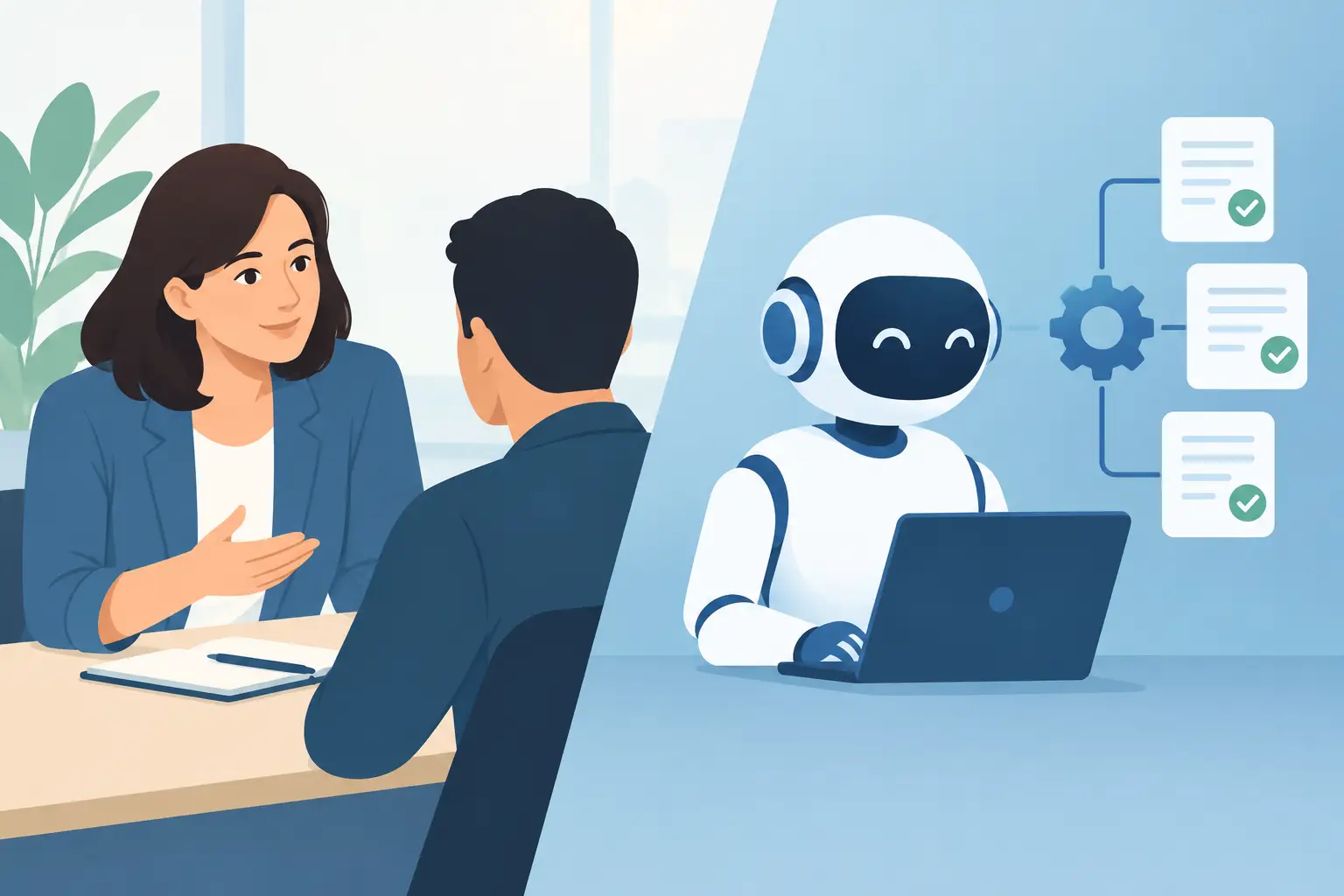
Claims organizations do not need to choose between human coaching versus claims automation as if one must replace the other. They need to decide which work should be automated, which decisions require professional judgment, and how claims professionals will develop the skills to use technology without becoming transactional. That distinction affects litigation risk, return-to-work duration, claim severity, regulatory performance, and the injured worker’s experience.
Automation can reduce friction in workers’ compensation claims. It can identify missing information, trigger routine correspondence, route tasks, flag anomalies, and organize large volumes of data at a scale no individual adjuster can match. But an injured worker does not experience a claim as a workflow. They experience pain, wage uncertainty, fear about employment, clinical recommendations, family pressures, and often a confusing system. Those realities require a skilled professional who can listen, explain, set expectations, and make sound decisions in context.
Human Coaching Versus Claims Automation: The Real Question
The useful question is not whether technology is better than people. It is whether the claims operation is assigning each capability to the work it performs best.
Claims automation is strongest when a process is repeatable, rules-based, high-volume, and supported by reliable data. A system can confirm whether a required field is complete, issue a status reminder, prioritize an overdue task, compare bill data against established rules, or identify a claim that meets a predefined escalation threshold. These applications can reduce administrative burden and give claims professionals more time for higher-value work.
Human coaching is strongest when the issue involves ambiguity, trust, motivation, competing interests, or a decision that could materially alter an injured worker’s recovery path. An experienced adjuster, nurse case manager, supervisor, or employer representative can hear what is not being said. They can recognize when a worker’s missed appointment reflects transportation barriers rather than noncompliance, when an employer’s light-duty offer is poorly communicated, or when a rushed conversation is creating the conditions for attorney involvement.
The distinction matters because claims outcomes are not produced by task completion alone. They are shaped by the quality of decisions and relationships throughout the life of the claim.
What Automation Can Improve
Well-governed automation can create meaningful operational gains. For organizations managing large claim inventories, even small reductions in manual task handling can improve diary discipline, documentation consistency, and response times. Automation can also support more reliable adherence to internal protocols by prompting adjusters when a claim requires an action, review, or referral.
It is particularly valuable in early claim handling, where speed and consistency matter. A system may help ensure that initial outreach occurs promptly, wage information is requested, compensability tasks are assigned, and required notices are tracked. These are not minor administrative details. Delays at intake can create confusion, slow care coordination, and leave injured workers without clear expectations.
Automation can also improve managerial visibility. Leaders can identify workload imbalances, aging tasks, recurring documentation gaps, and claim populations that warrant closer review. Used well, these signals support better supervision rather than replacing it.
However, an automated alert is only as useful as the professional response it triggers. Flagging a psychosocial risk factor, for example, is not the same as having a constructive conversation about it. A model can identify a pattern. It cannot establish credibility with a worker who believes the system is trying to move them off benefits before they are ready.
Why Human Coaching Changes Claim Outcomes
Human coaching is sometimes treated as a soft benefit, separate from technical claims competence. That is a costly mistake. Communication, empathy, expectation-setting, and conflict management are operational capabilities with measurable consequences.
Consider a worker whose physician has released them to modified duty. An automated message can notify the worker of the offer. A trained claims professional can explain what the release means, address concerns about pain or job security, confirm whether the work is genuinely available, and coordinate with the employer when restrictions need clarification. The second approach is more likely to surface barriers before they become a refusal, a prolonged absence, or a dispute.
Coaching also improves the quality of escalation. Not every delayed recovery requires the same intervention. A professional who understands whole-person recovery can distinguish between a clinical complication, a workplace relationship problem, financial stress, low health literacy, or a breakdown in communication. That assessment leads to a more appropriate next step and avoids treating every complex claim as a medical-management problem.
For supervisors, coaching means more than reviewing file notes for timeliness. It includes helping adjusters prepare for difficult conversations, challenge assumptions, document rationale, and understand how their language can either reduce or increase friction. The goal is not scripted empathy. It is disciplined, respectful claims practice.
The Risks of Automating the Wrong Moment
Automation creates risk when organizations apply it to moments that require explanation, discretion, or a tailored response. A generic denial-related communication, automated outreach after a serious injury, or rigid sequence of return-to-work reminders can feel impersonal or even adversarial when the recipient is distressed.
There is also a governance issue. Predictive tools may help identify claims for intervention, but teams must understand what the score represents, what data informed it, and what action is appropriate. A risk score should prompt professional inquiry, not substitute for a fact-based decision. Claims leaders remain accountable for compliance, fairness, privacy, documentation, and the rationale behind consequential actions.
Overreliance on automation can produce a different form of inconsistency: every claimant receives the same response regardless of their circumstances. Standardization has value, but workers’ compensation claims are not identical transactions. A worker with limited English proficiency, a catastrophic injury, an unstable housing situation, or a strained relationship with a supervisor may require a different communication plan than the workflow anticipates.
A Better Operating Model: Automate Tasks, Develop Judgment
The most effective model pairs automated workflow with deliberate workforce development. Automation should remove routine work so professionals can spend more time on claim strategy, recovery barriers, stakeholder alignment, and meaningful communication. Training should then ensure that professionals are prepared to use that time well.
Organizations should define clear decision rights. Systems can generate reminders, prioritize work, and surface patterns. Qualified professionals should assess material facts, explain options, determine when exceptions are warranted, and document why a course of action serves both compliance and recovery. Supervisors should review not only whether tasks were completed, but whether the intervention was appropriate and understood by the worker.
This approach requires role-specific education. Adjusters need technical competence in compensability, indemnity, medical management, and jurisdictional requirements, alongside communication skills that reduce avoidable conflict. Nurse case managers need clinical expertise and the ability to coordinate without overstepping the worker’s voice. Employer stakeholders need practical training on modified duty, respectful outreach, and the downstream cost of delayed engagement.
WorkCompCollege’s Whole Person Recovery Method™ reflects this operational reality: technical claims education and human-centered practice are not competing disciplines. They are connected performance requirements. A claims organization cannot claim a whole-person approach if its technology strategy removes the very conversations that reveal barriers to recovery.
How Leaders Should Evaluate the Balance
Before implementing or expanding automation, claims leaders should examine the process through three questions. First, is the task sufficiently repeatable and rules-based to automate without losing meaningful context? Second, what human review is required when the task affects benefits, treatment, return to work, or a potentially disputed issue? Third, does the workforce have the training to interpret automated signals and respond effectively?
Performance measurement should reflect both efficiency and claim quality. Cycle time, task completion, and inventory capacity matter, but they do not tell the full story. Leaders should also review litigation patterns, duration of disability, return-to-work outcomes, complaint themes, reopened claims, escalation rates, and the consistency of documented claim rationale. If efficiency rises while disputes or worker dissatisfaction rise with it, the process may be optimizing the wrong outcome.
The best claims technology does not make professionals less necessary. It makes their professional judgment more available at the moments when it can prevent delay, distrust, and unnecessary cost. Build automation around the work machines can do well, then invest in people who know how to guide recovery when the claim stops behaving like a workflow.