
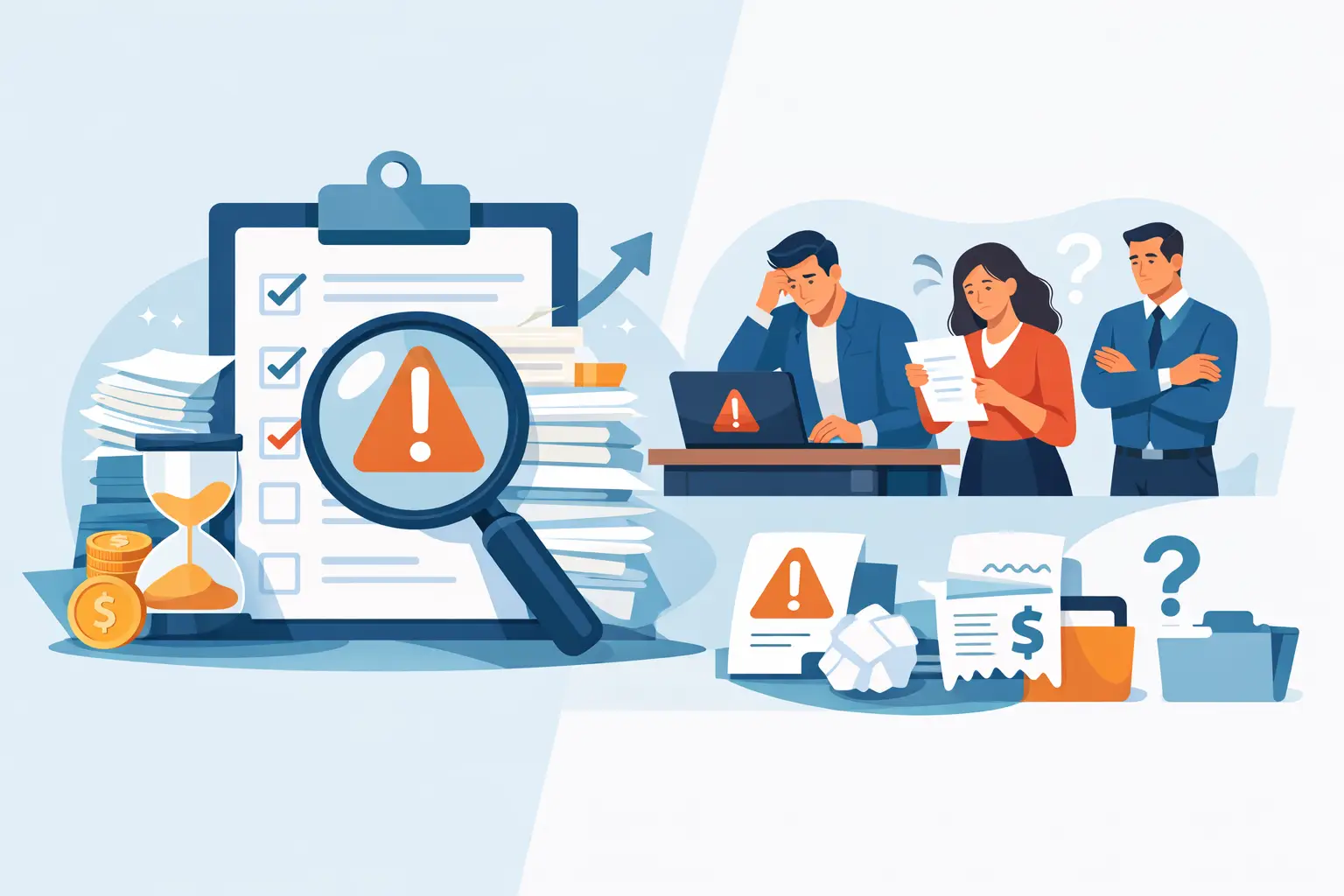
A claim file rarely breaks down because one note is missing. It breaks down when the record cannot explain why a decision was made, what the injured worker understood, or what should happen next. These five claims documentation mistakes create that exposure. They also erode trust at the exact point when clear communication, timely action, and whole-person recovery management matter most.
For claims organizations, documentation is not a clerical byproduct of handling a file. It is the operating record for benefit decisions, medical coordination, return-to-work planning, regulatory compliance, reserve accuracy, and litigation defense. A well-documented claim supports consistency across adjusters, nurse case managers, employers, providers, and counsel. A weak one creates avoidable ambiguity, rework, escalation, and cost.
Why documentation is a claims performance issue
Claims notes have two audiences: the professional handling the claim today and the professional who may inherit, audit, defend, or review it months later. If the file tells only a partial story, the next person must reconstruct the facts from scattered correspondence, system entries, and memory. That introduces delay and increases the likelihood of inconsistent decisions.
Documentation also shapes the injured worker experience. When communication attempts, expressed concerns, barriers to recovery, and agreed next steps are captured accurately, the file reflects a person-centered plan rather than a sequence of transactions. That distinction matters. Injured workers who feel unheard or confused may seek legal representation, disengage from treatment, or lose confidence in the process. Documentation cannot replace empathy, but it can demonstrate that empathy was applied with professional discipline.
Five claims documentation mistakes to correct
1. Recording activity without recording purpose
A note such as “Called claimant. Left voicemail” confirms an action, but it does not explain the purpose of the contact, the information needed, or the planned follow-up. In a high-volume environment, brief notes are understandable. Yet activity-only documentation leaves the file without a decision-making trail.
A stronger entry identifies why the contact occurred and what it was intended to accomplish. For example, the record might state that the adjuster called to clarify current work restrictions, confirm whether the employee received the treating provider’s updated instructions, and discuss any barriers to modified duty. If a voicemail was left, the note should identify the requested response and the date or event that will trigger the next outreach.
This level of detail improves continuity and supports accountability. It also prevents a common operational failure: several stakeholders assuming someone else is responsible for the next step. The goal is not to write a narrative for every phone call. The goal is to ensure each material action has a documented business purpose and a clear path forward.
2. Using vague or conclusory language
Words such as “uncooperative,” “doing better,” “noncompliant,” or “no issues” can create more questions than answers. They may also introduce bias into the record. What specific behavior supports the conclusion? What information did the injured worker provide? Was there a language, transportation, scheduling, financial, or health literacy barrier that affected follow-through?
Claims professionals should document observable facts, relevant statements, and the steps taken to resolve a problem. Rather than writing that an employee was “noncompliant with treatment,” record that the employee reported missing two physical therapy appointments because the clinic changed locations and public transportation was unavailable. Then document whether alternative scheduling, transportation resources, provider communication, or employer support was discussed.
The difference is operationally significant. The first statement may frame the worker as the problem. The second identifies a recovery barrier that can be addressed. Whole-person recovery requires claims professionals to distinguish between unwillingness and inability, particularly when social or practical obstacles affect medical progress and return-to-work outcomes.
3. Failing to document communication and expectations
Many disputes begin with an expectation that was never clearly set or never documented. The worker may believe wage-replacement benefits will continue indefinitely. The employer may expect immediate full-duty release. A provider may not understand the available modified-duty options. The adjuster may assume each party received the same information.
The file should show what was explained, to whom, when, and how the recipient responded. This includes benefit status, medical authorization processes, appointment requirements, return-to-work expectations, work restrictions, dispute pathways, and the next scheduled point of contact. For consequential conversations, document the person’s questions and any confusion that required clarification.
This is especially important when a claim changes direction. If benefits are modified, denied, suspended, or reinstated, the record should reflect the factual basis, applicable requirements, notices issued, and communications made. State-specific rules vary, so the precise documentation standard depends on jurisdiction and organizational policy. The principle does not vary: if an explanation matters to the outcome, it belongs in the file.
4. Treating medical records as a substitute for analysis
A medical report is evidence. It is not a claims handling plan. Uploading records without documenting their significance leaves critical questions unanswered: What restrictions are currently in place? Has the diagnosis changed? Is the treatment plan progressing? Is there a mismatch between reported function and job demands? Does the employer have work within the restrictions?
Effective documentation translates material medical information into claims action. A concise note can identify the provider’s restrictions, compare them with the essential functions of the job, record outreach to the employer regarding modified duty, and establish the next review date. If the record contains inconsistencies or an unclear prognosis, document the question that needs resolution rather than allowing uncertainty to remain invisible.
Professionals must also avoid overstating clinical conclusions. Claims staff should accurately report what the provider documented and identify the claims implications without independently diagnosing the injured worker. When nurse case management or utilization review is involved, clear role-based documentation helps preserve appropriate boundaries while keeping the recovery plan coordinated.
5. Documenting late, inconsistently, or outside the system of record
A detailed note entered weeks after an event is less reliable than a timely, focused note created close to the interaction. Delayed documentation can make timelines difficult to defend, obscure whether required actions occurred on time, and complicate handoffs. Notes kept in personal notebooks, email folders, or informal team messages create an additional risk: the material may not be available to the people who need it or may not be retained according to policy.
The practical standard is contemporaneous documentation of material events in the approved claim system. That includes significant conversations, medical updates, benefit decisions, employer communications, recovery barriers, escalations, and commitments for follow-up. Not every internal thought needs to be captured. The record should contain the information necessary for another qualified professional to understand the claim’s status, rationale, and next action.
Consistency matters as much as speed. Organizations should define documentation expectations by claim stage and role, then train and audit to those standards. A frontline adjuster, nurse case manager, supervisor, and employer liaison may document different elements, but the combined file should present one coherent recovery strategy. Inconsistent documentation often signals inconsistent handling.
Build documentation habits into the claims workflow
The corrective action is not simply telling professionals to “write better notes.” Strong documentation depends on role-specific training, usable workflows, quality assurance, and leadership reinforcement. Templates can help when they prompt the right judgment: contact purpose, facts learned, worker concerns, actions taken, decision rationale, ownership, and next steps. Templates become counterproductive when they produce generic, copied-forward language that hides rather than clarifies the claim story.
Supervisory review should examine more than whether a note exists. It should assess whether the documentation supports a timely decision, demonstrates respectful communication, identifies barriers to recovery, and assigns a next action. This creates a direct line between file quality and business outcomes such as cycle time, litigation exposure, return-to-work duration, and claimant satisfaction.
WorkCompCollege’s Whole Person Recovery Method™ reinforces a central reality of modern claims management: technical precision and human connection are not competing competencies. A professional can document policy requirements, medical facts, and statutory actions while also recording the worker’s concerns, functional goals, and practical barriers with respect.
The strongest claim file does more than preserve what happened. It gives every participant a clearer chance to make the next right decision for the injured worker, the employer, and the organization.