WorkCompCollege – Workers' Compensation Certifications

Blog

  • What Causes Workers Comp Litigation in Claims?

    What Causes Workers Comp Litigation in Claims?

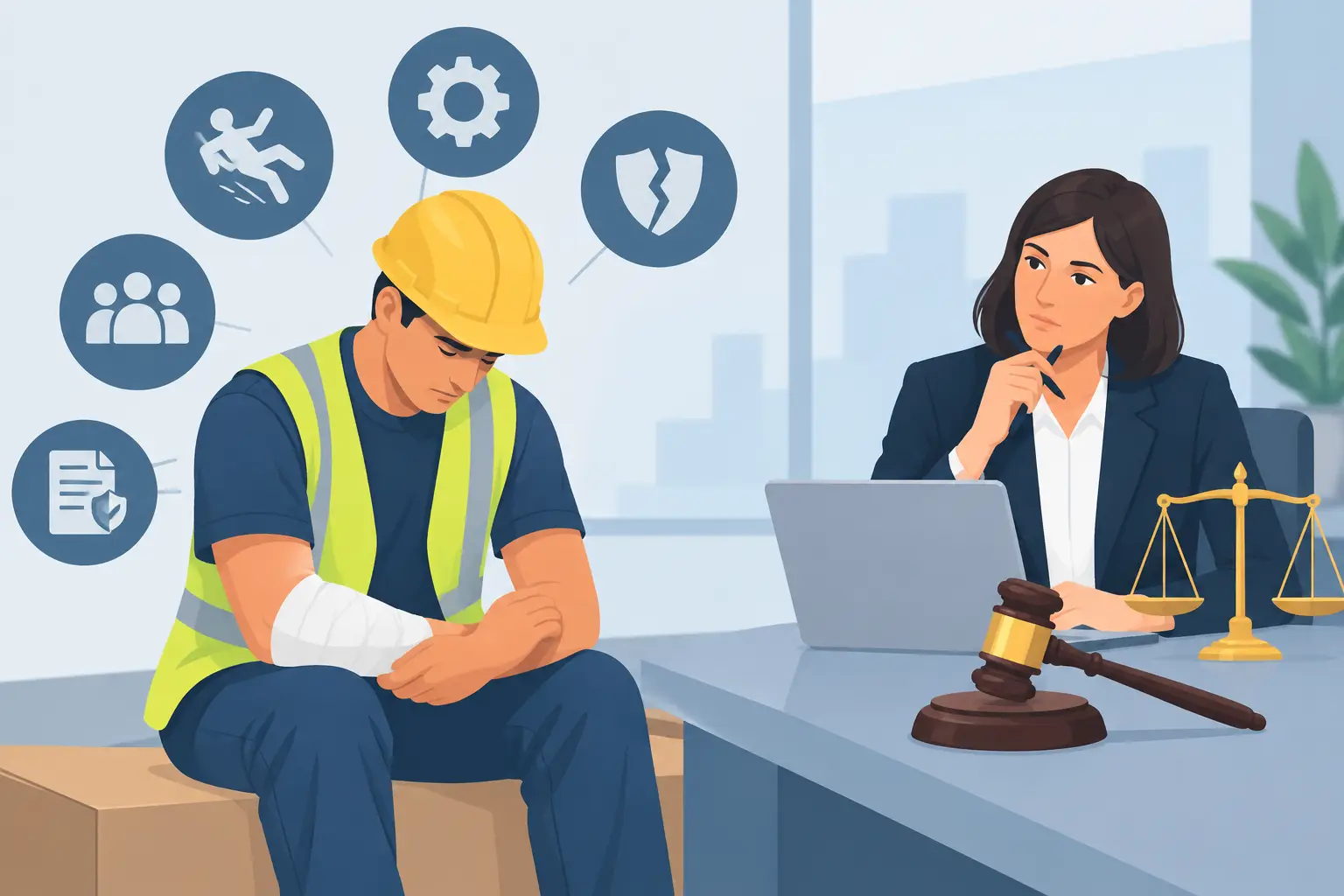
    A claim rarely becomes litigated because of a single difficult conversation or one delayed form. More often, what causes workers comp litigation is a cumulative breakdown in trust, clarity, timeliness, and technical claim execution. By the time an injured worker retains counsel, the organization may be facing not only a legal dispute, but also a recovery plan that has lost momentum, a longer claim duration, and higher total cost.

    For claims leaders, the practical question is not whether every disputed claim can be prevented. It cannot. Compensability questions, complex medical conditions, jurisdictional rules, and permanent impairment disputes will continue to require formal resolution in some cases. The operational opportunity is to identify which litigation drivers are preventable and build the capabilities that keep routine friction from becoming adversarial.

    What Causes Workers Comp Litigation Most Often?

    Workers’ compensation litigation usually begins where the injured worker perceives a gap between what they need and what the system is delivering. That perception may arise from a denied claim, but it can just as easily arise from silence, confusing explanations, inconsistent direction, or a return-to-work process that feels punitive rather than supportive.

    Claims professionals should distinguish between legal exposure and relationship exposure. A claim can be legally defensible and still produce attorney involvement if the injured worker does not understand the decision, does not know what happens next, or believes no one is accountable for moving the claim forward. Conversely, a difficult claim may remain collaborative when communication is credible, respectful, and consistent.

    Delayed Decisions and Unexplained Gaps

    Time is one of the strongest predictors of frustration. Delays in reporting, investigation, authorization, benefit delivery, or scheduling can leave an injured worker without income certainty, treatment direction, or confidence in their employer. When no one explains the reason for the delay and provides a specific next step, an attorney can appear to be the only available advocate.

    Some delays are unavoidable. A carrier may need medical records, a recorded statement, an independent medical examination, or additional facts about the mechanism of injury. The differentiator is not simply speed. It is active expectation-setting: explaining what information is needed, who is responsible, when a decision is expected, and how the worker can obtain an update.

    Disputed Compensability, Causation, and Medical Necessity

    Litigation is more likely when the parties disagree about whether an injury arose out of employment, whether work materially contributed to a condition, or whether proposed treatment is reasonable and necessary. Preexisting conditions, cumulative trauma allegations, delayed reporting, and conflicting medical opinions can make these disputes especially complex.

    Technical accuracy matters here. Claims teams need a working command of jurisdiction-specific rules, documentation standards, medical management protocols, and benefit requirements. But technical accuracy alone is not enough. A denial or utilization review decision that is correct but delivered in opaque, impersonal language can still escalate conflict. Injured workers need a plain-language explanation of the decision and a realistic understanding of their options within the applicable process.

    Poor Communication Across the Claim Ecosystem

    Workers’ compensation is a multi-party system. The employer, supervisor, adjuster, nurse case manager, provider office, pharmacy, attorney, and injured worker may all hold different pieces of the recovery plan. When those parties communicate inconsistently, the worker experiences the system as disorganized, even if each individual participant believes they are doing their job.

    A supervisor who tells a worker to stay home, an adjuster who expects modified duty, and a provider who has not received a job description create an avoidable contradiction. The issue is not merely service quality. It is claim strategy. Conflicting messages can undermine return-to-work, delay recovery, and give rise to allegations that the employer is not acting in good faith.

    Communication competency should therefore be treated as a formal claims skill. Professionals need to know how to listen for concerns, explain decisions without overpromising, document meaningful contacts, and recognize when a worker has stopped trusting the process. Empathy is not a substitute for compliance or sound reserving. It is a performance discipline that improves the quality of information, cooperation, and decision-making.

    Return-to-Work Failures Create Avoidable Conflict

    Return-to-work is often discussed as a cost-control initiative. It is also a litigation-control initiative. Meaningful transitional work maintains connection to the workplace, supports functional recovery, and reduces the uncertainty that can drive prolonged disability. A vague or poorly managed program can have the opposite effect.

    Problems emerge when modified duty is not actually available, restrictions are ignored, managers resent the accommodation, or the worker believes the assignment is designed to pressure them out. Employees may also receive little information about wage replacement, transportation, appointments, or how their restrictions will be reassessed. Under those conditions, an attorney becomes more likely to enter the claim as a source of clarity and protection.

    Effective programs begin before an injury occurs. They define available transitional assignments, train supervisors, establish a process for obtaining functional restrictions, and make sure the employee hears a consistent recovery-focused message. The right assignment depends on medical restrictions, job demands, state requirements, and the worker’s functional capacity. It should never be reduced to a generic light-duty offer.

    Administrative Errors and Compliance Breakdowns

    Missed deadlines, incorrect wage calculations, late benefit payments, incomplete notices, poor documentation, and mishandled medical authorizations can transform an otherwise manageable claim into a dispute. These failures may create penalties or legal leverage, but their broader damage is relational: they signal to the injured worker that the system is unreliable.

    For organizations managing claims across multiple jurisdictions, compliance risk is not static. State forms, deadlines, provider rules, reporting obligations, and dispute procedures vary. A centralized workflow without state-specific education can produce inconsistent execution at the frontline. That inconsistency becomes especially costly when turnover, high caseloads, or outsourced functions weaken institutional knowledge.

    Training should connect compliance requirements to the worker experience. A timely notice is not only a filing obligation. It is often the worker’s first clear explanation of benefits and responsibilities. A complete claim note is not only an audit requirement. It preserves context so that the next professional does not force an injured worker to repeat a stressful story.

    Claims Handling That Feels Transactional

    A transactional claim process focuses narrowly on tasks: obtain the statement, issue the payment, schedule the appointment, close the file. Those tasks matter, but they do not capture the human factors that influence recovery. Pain, financial anxiety, fear of job loss, family responsibilities, language barriers, and uncertainty about medical care all affect how a worker responds to the claim.

    Ignoring those factors does not make them disappear. It leaves the claims team with less information and the worker with fewer reasons to cooperate. Whole-person recovery management recognizes that clinical, occupational, psychosocial, and administrative issues interact. It asks professionals to manage the claim with disciplined empathy, not sentimentality.

    That approach also requires boundaries. Claims professionals should not make medical promises, provide legal advice, or imply outcomes they cannot control. They should communicate clearly, follow through on commitments, escalate barriers promptly, and treat questions as indicators of what the process has failed to explain.

    Reducing Litigation Requires More Than a Script

    Organizations sometimes respond to rising attorney representation by issuing a new call script or adding a service metric. Those actions can help, but litigation reduction requires a broader operating model. Leaders should examine where claims first lose trust: first notice of loss, initial contact, benefit explanation, treatment access, supervisor engagement, modified duty, or dispute handling.

    Useful performance measures extend beyond closure rates and indemnity spend. Consider attorney involvement by claim type and office, time to first meaningful contact, time to first payment, treatment authorization turnaround, return-to-work duration, complaint themes, and reopened claim patterns. The objective is not to discourage legitimate representation. It is to identify recurring operational failures before they become embedded in claim outcomes.

    WorkCompCollege’s Whole Person Recovery Method™ reflects this principle: technical claims capability and human-centered practice should be developed together. A well-trained professional can interpret policy and statutes, coordinate appropriate care, set realistic expectations, and communicate with respect under pressure. That combination protects both recovery outcomes and organizational performance.

    The most productive litigation strategy begins long before a petition is filed. Give injured workers timely information, credible explanations, appropriate care coordination, and a genuine path back to work. When the claim experience demonstrates competence and respect, fewer routine problems need to become legal battles.

  • Replay or Reframe

    I had a very difficult June, losing both my daughter-in-law and best friend to cancer. During that time (and since), my mind did something predictable.

    I replayed the circumstances. The extended battle, the moment, the preparation of my BFF’s eulogy / watching my son eulogize his wife, the fond memories of the past that remind me there will be no future memories to make.

    The replays only helped let something in the past occupy my present. The more I replayed them, the more power I gave it.

    Then I remembered cognitive reappraisal, a concept that psychologists have shared with me over the years in one-on-one conversations and from conference stages.

    Reframe.

    Reframing doesn’t change what happened. It changes the frame (or prism) through which we look at what happened. The facts remain the facts. Instead of asking, Why did this happen to me?, the question becomes, What can I do with where I am now?

    Instead of counting my problems, I started deliberately counting my blessings (yes, I sang that song to myself). Instead of continually looking backward, I tried to redirect myself toward the present and eventually toward the future.

    I did not pretend the difficult things didn’t happen. I simply decided they did not deserve unlimited reruns.

    How often do we make injured workers replay instead of helping them reframe?

    Think about what happens after a workplace injury. The supervisor, then HR, asks what happened. The initial medical provider asks. The nurse asks. The claims adjuster asks. The nurse case manager asks. Maybe an investigator asks. If litigation occurs, attorneys, experts, and others may eventually ask.

    Tell me what happened.

    Again. And again. And again.

    Obviously, that information is necessary. Clinicians need an understanding of the medical history. Claims professionals need to investigate the compensability of the claim. Employers need to understand how an accident occurred so they can mitigate future accidents. There are legitimate medical, legal, safety, and administrative reasons for asking questions.

    I wonder whether we sufficiently appreciate what we may also be asking the person to do: Replay one of the worst moments of their life.

    For us, it may be another claim intake.

    For them, it may be the moment the machine caught their hand, the ladder moved, the truck crossed the center line, they heard the pop in their back, they looked down and realized something was terribly wrong.

    We need the story. But perhaps we don’t need to keep making them live in it.

    What if we changed the questions? This is where reframing becomes interesting to me from a work comp perspective. After we have the facts we legitimately need, what if more of our conversations shifted from:

         What happened to you?

         to

         How are you doing today?

    Followed by:

    • What’s better than it was last week?
    • What can you do today that you couldn’t do a month ago?
    • What are you looking forward to getting back to?
    • What’s important to you outside of work?
    • What would progress look like to you?
    • What can we help you accomplish next?

    Notice what those questions do. They don’t deny the injury, minimize pain, or promise an outcome. They certainly don’t eliminate legitimate claims investigation or medical history-taking. They simply move the center of gravity. The injury becomes part of the person’s story rather than the only part of the story.

    That is a very different frame.

    We tend to measure what is wrong. Workers’ compensation is remarkably good at documenting deficits …

    • Pain is 7 out of 10 (FYI … I have not been a fan of the visual analog scale since 2003)
    • Range of motion is limited
    • MRI shows this, restrictions prohibit that
    • Employee cannot lift 20 pounds
    • Employee cannot stand longer than 30 minutes
    • Employee has not reached maximum medical improvement

    Those measurements matter.

    But imagine experiencing your recovery primarily through a system that continually catalogs everything you cannot do.

    What happens if we also start measuring what is returning?

    • I walked to the mailbox today
    • I drove for the first time
    • I slept through the night
    • I picked up my child
    • I made dinner
    • I worked four hours
    • I laughed with my coworkers
    • I went fishing
    • I had an entire afternoon when I didn’t think about my injury

    Those things may never appear in a claims system, but they are evidence of recovery. Some of our most important milestones don’t have billing codes.

    This connects directly to empathy. On September 3 I wrote about empathy not being soft, but strategic. To me, reframing is a natural extension of that idea.

    Empathy asks us to understand what an injured worker may be experiencing. Reframing asks us what we can do with that understanding.

    We cannot change the accident. We cannot un-break the bone. We cannot erase the surgery. We cannot give someone back the Tuesday morning before everything changed.

    But we can be intentional about where our interactions direct their attention next.

    • Toward the injury or toward recovery?
    • Toward everything they’ve lost or toward what they’re regaining?
    • Toward what happened or toward what happens next?

    That doesn’t require becoming someone’s therapist. It requires becoming more thoughtful about our words.

    To be clear, reframing isn’t positive thinking. Telling someone who is hurting to “look on the bright side” isn’t reframing. It could actually be perceived as dismissive, condescending, or invalidating.

    Reframing doesn’t replace reality with optimism. It expands reality.

    • Yes, this happened … and this is where we are now.
    • Yes, you still have pain … and look at the progress you’ve made.
    • Yes, your life may be different … and let’s talk about what you want that life to look like.

    Both things can be true.

    That’s what I had to (re)learn this summer. Counting my blessings didn’t dry my tears. Being present didn’t rewrite the past. Looking toward the future didn’t mean pretending everything behind me was wonderful. I just stopped giving the replay button quite so much attention. Instead, I focused on supporting both surviving spouses and my two granddaughters.

    Workers’ compensation professionals encounter people during seasons they didn’t choose.

    We cannot control how someone responds to an injury. We cannot manufacture resilience. And we should never trivialize the emotional consequences of having health, independence, income, identity, or purpose suddenly disrupted. But we can influence the environment surrounding their recovery.

    Every conversation can reinforce the injury or create a little more room for the person beyond the injury. Every question can pull someone backward or help them look forward. Every interaction can focus exclusively on what’s wrong or remind someone of what’s becoming right again.

    We will always need to ask: “What happened?”

    Maybe we just need to become equally good at asking: “What’s possible now?”

    The past deserves to be understood, but it doesn’t deserve to be lived forever. Just like my difficult June.

  • Flying Out of SRQ

    We have a great little secret here in Sarasota/Bradenton. Well, it’s not the great secret it used to be, as people have discovered it, but its still pretty cool. It is the Sarasota Bradenton International Airport, code named SRQ.

    Now honestly, this is an article about customer service, not an airport. But I do love to fly out of this place, and it is relevant to the tale. 

    The airfield has been here many years. They conducted training for World War II pilots here. For many years it was a relatively sleepy place, but always convenient for grabbing a flight; if, that is, you could find one with a decent schedule at an acceptable price. For the longest period it suffered the similar fate of other small, regional airports, limited flights and more expensive than those available at Tampa (also a great airport), just an hour or so north of here.

    Such it was that for years I schlepped up Interstate 275 to catch flights to my various business gatherings. There were not that many options available here. I should also mention that for years I was an enthusiastic Southwest Airlines customer, and when Southwest bought AirTran, they dropped SRQ. I thought it was a terrible mistake and did not know that I would one day have the opportunity to tell them that.

    Several years ago, before COVID, I was volunteering at a local golf tournament for my Sertoma Club. The then CEO of SRQ, Rick Piccolo, was one of our golfers. When he got to the registration table where I was stationed, he suddenly pointed at me and started yelling, “You’re wearing the wrong hat!” It took me a moment to remember I was wearing a Southwest Airlines cap, which I had received when at their corporate offices the year before. 

    We chatted amicably about the airport, and how I wish they would get Southwest back. He told me they were talking, and he was hopeful that they would one day get them to provide service to the airport. I asked him to provide me the name of the person they were dealing with, and offered to send an email as a Companion Pass Holding, A-List Preferred customer who was tired of schlepping to Tampa. He obliged and emailed me the information the next day.

    Finally – getting to the customer service part of the story.

    I sent the company an email, establishing my company loyalty and pitching the reasons they should consider SRQ. To my surprise, the guy called me. We had a great talk, and he was optimistic that Sarasota would one day be a Southwest destination. That was it. I didn’t think much else of it until about a year later when I saw an announcement on LinkedIn that they were adding SRQ to their network.

    The real surprise for me was that the day Southwest emailed Piccolo their inaugural day flight schedule. They copied me on the email. Probably a year had gone by since I had that phone conversation, and I couldn’t believe that they included me in the email. After all, I was just a schlub with an opinion I was willing to share. I played no real part in the negotiations or decision. But they remembered to note a customer’s wishes. That was attention to detail. That was true service. And I appreciated the gesture.

    If we could employ that level of communication and consideration in the workers’ compensation world, we’d be a lot better off. We need to remember that it is sometimes the smallest, simplest gestures that can gain the greatest results. 

    So if you have a chance today, check in with that injured worker. See how they are doing. Make the simple effort today, as you may see great results from it in the future.

    Today, SRQ is a bustling place. Southwest is one reason that is the case, but explosive post-pandemic growth here in the Free State of Florida didn’t hurt. Unfortunately, an activist investor at Southwest forced many changes I do not really agree with, and as I write this, I am sitting in Delta gate B4 waiting for my flight to Las Vegas. Que’ Sera Sera.

    But it doesn’t change the fact that a small effort boosted years of loyalty, and what was the simplest of efforts made a true impact. 

    Sometimes the short game is the best. We should play it more often.

  • 10 Top Nurse Case Management Skills That Matter

    10 Top Nurse Case Management Skills That Matter

    An injured employee who does not understand the treatment plan, the expected recovery timeline, or the purpose of a return-to-work discussion is more likely to disengage from the claim process. That is where the top nurse case management skills become operationally significant. In workers’ compensation, clinical knowledge alone does not produce better outcomes. Nurse case managers must turn complex medical information into coordinated action that supports recovery, preserves trust, and helps every stakeholder make sound decisions.

    The role sits at the intersection of the injured worker, treating provider, employer, claims professional, and, at times, legal and regulatory stakeholders. Strong performance requires technical discipline, human-centered communication, and a clear understanding of how medical progress affects claim duration, indemnity exposure, litigation risk, and return-to-work outcomes.

    Why nurse case management skills affect claim performance

    Nurse case management is often measured by activity: appointments coordinated, records reviewed, calls completed, and reports delivered. Those tasks matter, but activity is not the outcome. Effective case management advances a defensible, clinically appropriate recovery plan while reducing confusion and avoidable delay.

    A nurse case manager cannot direct medical care or substitute judgment for the treating provider. The value of the role is different. It is the ability to identify barriers early, facilitate accurate communication, set realistic expectations, and keep recovery planning connected to the worker’s functional capacity and employment context. When those capabilities are inconsistent, claims can become fragmented, adversarial, and unnecessarily expensive.

    10 top nurse case management skills for workers’ compensation

    1. Clinical assessment with a functional focus

    A diagnosis does not tell the entire recovery story. Skilled nurse case managers assess how an injury, treatment plan, comorbidity, pain concern, or psychosocial factor may affect function at work and at home. They distinguish between a chart update and a meaningful change in recovery trajectory.

    This requires asking practical questions: What can the employee do today? What restrictions are medically supported? What barriers may prevent treatment adherence or a safe return to work? Functional assessment helps the claims team and employer plan around capability rather than assumptions.

    2. Clear, respectful communication

    Workers’ compensation language can be confusing even for experienced professionals. Injured workers may be managing pain, financial concern, fear about job security, or distrust of the process. Nurse case managers must communicate with clarity, patience, and respect without overpromising outcomes.

    This skill is not merely interpersonal. Poor communication creates missed appointments, misunderstandings about restrictions, and a greater likelihood that concerns will escalate. Clear explanations of treatment purpose, next steps, and expected timing can reduce uncertainty before it becomes conflict.

    3. Active listening and empathy

    Empathy is often mischaracterized as a soft or optional capability. In claim operations, it is a practical tool for obtaining accurate information and building the trust needed for recovery engagement. A worker who feels dismissed may withhold concerns about pain, transportation, medication side effects, family responsibilities, or a difficult workplace relationship.

    Active listening does not mean agreeing with every conclusion or abandoning clinical objectivity. It means hearing the worker’s experience, validating legitimate concerns, and responding with appropriate next steps. This is central to a whole-person recovery approach because medical treatment occurs within a person’s real life circumstances.

    4. Expectation-setting

    Recovery rarely follows a perfectly linear schedule. The nurse case manager must explain what is known, what remains uncertain, and what each party can reasonably expect from treatment and work planning. This is particularly important when a worker expects immediate resolution, an employer expects a rapid return, or a provider’s plan is still evolving.

    Effective expectation-setting prevents false reassurance and reduces unnecessary surprise. It also creates accountability. When everyone understands the next clinical milestone, the responsible party, and the anticipated decision point, the file is more likely to move with purpose.

    5. Provider collaboration

    Treating providers are responsible for medical decision-making. Nurse case managers support the process by ensuring providers have relevant job demands, prior clinical information when appropriate, authorization details, and timely questions from the claims team. The goal is not to influence care improperly. It is to facilitate informed, efficient communication.

    Collaboration is especially valuable when work restrictions are vague, treatment recommendations change, or a referral has not occurred as expected. A concise, clinically grounded conversation can resolve uncertainty that might otherwise delay care or return-to-work planning.

    6. Return-to-work coordination

    Return to work is not simply a release date. It is a coordinated plan that must align documented restrictions, essential job functions, available transitional work, transportation realities, and the worker’s understanding of the assignment. A premature or poorly explained return can undermine confidence and lead to reinjury concerns, absence, or dispute.

    Strong nurse case managers translate clinical restrictions into functional terms that employers and claims professionals can use. They also recognize when transitional duty is not feasible and communicate that reality early, rather than allowing an unworkable plan to fail after the fact.

    7. Documentation and reporting discipline

    Case management documentation must be accurate, timely, objective, and relevant to the assigned role. It should separate observed facts, reported concerns, provider guidance, and professional assessment. Vague notes or unsupported conclusions create operational risk and make it harder for claims professionals to act confidently.

    High-quality reporting also respects confidentiality and the boundaries of information sharing. In workers’ compensation, documentation may be reviewed by multiple stakeholders and can become consequential in disputed matters. Precision protects the injured worker, the nurse case manager, and the organization.

    8. Regulatory and compliance awareness

    Nurse case managers need a working understanding of jurisdictional workers’ compensation requirements, privacy obligations, utilization processes, and organizational protocols. Requirements vary by state and claim circumstance, so a one-size-fits-all workflow can create avoidable exposure.

    Compliance awareness does not require the nurse case manager to serve as legal counsel. It does require recognizing when an issue needs escalation, documenting appropriately, and avoiding actions outside the scope of assignment. This discipline supports defensible claims handling and more consistent service delivery.

    9. Barrier identification and problem-solving

    The visible medical issue is not always the factor delaying recovery. Missed therapy may reflect transportation limitations. Delayed medication may involve pharmacy access. Resistance to modified duty may stem from a misunderstanding, workplace conflict, or fear of aggravating an injury.

    Effective nurse case managers investigate barriers without making assumptions. They gather information, identify the parties who can help resolve the problem, and document a focused plan. The best intervention depends on the barrier. More calls are not inherently better if the underlying issue has not been identified.

    10. Professional judgment and escalation

    Case management requires judgment about what needs immediate attention, what can be monitored, and what should be escalated to the claims examiner, supervisor, provider, or another specialist. A material change in function, a significant treatment concern, a potential safety issue, or repeated breakdowns in communication may require prompt action.

    This skill depends on clinical reasoning and disciplined role boundaries. Escalation should be timely and fact-based, not alarmist. When nurse case managers recognize risk early and communicate it clearly, organizations can address problems before they become prolonged claim complications.

    Developing nurse case management skills as a system

    Individual talent matters, but organizations should not rely on instinct alone. Consistent nurse case management performance requires formal education, scenario-based practice, calibrated documentation standards, and coaching that connects behavior to claim outcomes. Training should address both technical competencies and the communication habits that influence worker engagement.

    For example, a nurse case manager may understand restrictions clinically but still need practice explaining them in a way that reduces worker anxiety and helps an employer build an appropriate transitional assignment. Likewise, a strong communicator needs sufficient workers’ compensation knowledge to recognize when a treatment, compliance, or return-to-work issue should be escalated.

    A workforce development strategy should evaluate whether nurse case managers can apply skills across the full claim lifecycle: early injury outreach, provider coordination, recovery monitoring, work planning, and closure preparation. WorkCompCollege’s whole-person recovery framework reflects this standard by treating empathy, expectation-setting, and technical expertise as connected professional competencies, not separate categories.

    The strongest nurse case managers do more than move information between parties. They create the conditions for informed decisions, credible recovery plans, and respectful worker experiences. That work is where better clinical coordination and better claim economics begin.

  • A Quarterback’s View of Workers’ Compensation

    One of the sessions I attended at the WCI Conference in Orlando was a Workers’ Compensation 101 panel featuring Judge Melissa Jones, Stuart Colburn, Mark Pew and Bob Wilson. The session covered a lot of ground, beginning with the history of workers’ compensation and eventually landing on a question that I think is worth asking ourselves today: Have we become so busy working within the system that we sometimes lose sight of what the system was designed to accomplish?

    The history was fascinating. We learned that the idea of compensating workers for workplace injuries goes back much further than most of us probably realize. The panel took us from ancient injury schedules to pirates, the Industrial Revolution, and the devastating Triangle Shirtwaist Factory fire on March 25, 1911 that was the impetus for the development of workers’ compensation in the United States.

    But the history wasn’t really the point.

    The point was that workers’ compensation evolved because there was a need to find a better way to take care of injured workers while also protecting employers from the uncertainty of civil litigation. That balance became what we know as the Grand Bargain.

    Over the years, however, we have built a very complicated industry around that original bargain.

    As the panel pointed out during the session, the people in 1911 could never have imagined a conference like WCI, with thousands of people, hundreds of exhibitors and representatives from across the country coming together to talk about workers’ compensation.

    And that complexity can create a problem of its own.

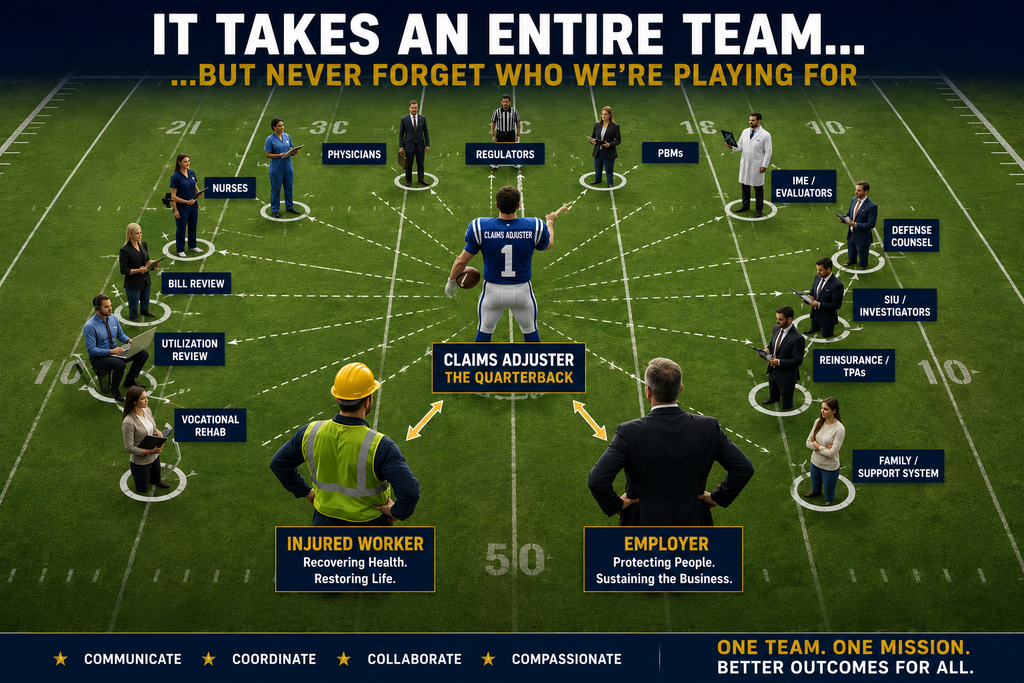
    The session included a football analogy that I thought was particularly effective. The claims professional is the quarterback, coordinating all the different players (the attorneys, the providers, the case managers, etc.) making sure the right person is involved at the right time. Everyone has a role, but sometimes we lose sight of the bigger picture. We forget how all of those roles fit together, and we fail to respect the consequences if someone drops the ball.

    So, what’s the play? The play isn’t simply to close the claim. The play is to help the injured worker recover.

    And that led to one of the most important points of the presentation for me.

    The goal isn’t simply to return to work; the goal is to return to life. 

    Of course, returning to work is important. But an injured worker also wants to get back to their family, their community, their activities and the things that make their life their own. The panel made the point that if we focus on returning someone to function, returning to work becomes part of that recovery.  The distinction is subtle but screams loudly of importance.

    The presentation also brought communication into the conversation. They discussed the importance of meaningful first contact with an injured worker within 24 hours, not simply leaving a voicemail to complete the task. They also emphasized how the employer’s response in those first few minutes after an injury can set the tone for everything that follows.

    That makes sense when you put yourself in the injured worker’s position.  Step into your imagination with me.  

    You have been hurt at work. You don’t know what happens next. You may be worried about your health, your paycheck and your family. Then someone from an insurance company or third-party administrator calls, and you don’t know who they are or whether they are calling to help you or challenge you.

    An adjuster’s communication in that moment isn’t just a claims function.  That action is a vital component of the recovery process and leaves a first impression.  When the conversation ends, my hope is that the adjuster is beaming with pride for a job well done.

    The panel also talked about the role of family members and the impact an injury can have beyond the person who was hurt. That was another good reminder that we aren’t really dealing with a claim. We are dealing with a person whose life, and often whose family’s life, has been disrupted.

    I respect how easy it is to get caught up in the mechanics of the workers’ compensation process.  There will always be another claim to manage, another regulation to interpret, another medical issue to address and another deadline to meet.

    But occasionally, we need to step back and look at the whole field, read the defense, identify the barriers, and call the correct play.

    Why are we here? What are we trying to accomplish? And are all the pieces of our complicated system working to help the injured worker get back to life while providing the employer with the protection of the Grand Bargain?

    We may have built a much bigger and more complicated system around that idea, but perhaps we shouldn’t let the complexity obscure the purpose.

    That was my biggest takeaway from the session.

  • When a Workers’ Compensation Claim Lasts 2 Years: Lessons for Adjusters

    Key Insight for Claims Professionals: For claims managers, adjusters, and risk professionals handling long-duration workers’ compensation claims, the medical timeline isn’t the only thing that determines how a claim feels to the person living through it. Communication gaps, payment delays, and unclear treatment sequencing add a second layer of strain that has nothing to do with the injury itself, and everything to do with how the claim is managed.

    How a Long Duration Workers’ Compensation Claim Affects Recovery and Trust

    Two years. That’s how long Anthony’s workers’ compensation claim lasted before he reached maximum medical improvement (MMI), a milestone indicating that a worker’s condition isn’t expected to improve significantly with additional treatment. Two years that included four rounds of physical therapy, numerous steroid injections, delayed paychecks, and one stretch of five weeks without a check at all.

    Anthony didn’t just wait to get better. He waited to find out whether he’d get better, often without a clear picture of why the process was taking the shape it did.

    “I’ve been away from my job for two years,” he said. “I’m ready to get back to work. I’m ready to get back to my normal life. I don’t understand why it’s taken so long.”

    His experience is a reminder that an extended claim timeline isn’t neutral. It compounds financial pressure, tests relationships, and wears on an injured worker in ways that have little to do with the injury itself.

    Key Insight for Claims Professionals: Organizations routinely measure claim duration, medical progress, and return-to-work outcomes. Far fewer evaluate the impact of prolonged uncertainty. Yet for many injured workers, uncertainty becomes part of the injury experience itself. When workers don’t know what comes next, why treatments are being recommended, or when they can expect progress, the passage of time becomes its own burden.

    Meet Anthony: A Delivery Driver Sidelined by a Back Injury He Didn’t Know Was Serious

    Anthony worked as a transport and delivery driver for a dairy company. When his back started hurting in November 2023, he assumed he strained it. He kept working, and his employer lightened some of his physical duties, assigning him to ride along with a trainee instead of running his usual route.

    The pain didn’t go away. When he finally saw a doctor, they discovered multiple fractures in his spine. Even the lighter version of his job, getting in and out of the truck cab, was aggravating the injury. His employer sent him home to focus on rehabilitation, and several months later, he was offered his first light-duty assignment.

    Anthony was eager to move past it. Meeting with a specialist, he was confident the answer was surgery.

    “I’m ready! I was like, ‘let’s do it today!’”

    Instead, the doctor recommended physical therapy and steroid injections first, explaining that since it wasn’t a life-or-death situation, there was time to try less invasive treatment before surgery.

    Why Treatment Plan Transparency Matters in Long-Duration Workers’ Compensation Claims

    Two years passed before surgery was approved for Anthony. He went through four separate rounds of physical therapy and numerous steroid injections that, he said, brought no noticeable relief. When approval for surgery finally came, another condition came with it: a weight-loss program he needed to complete first, with no surgery date set until he did.

    Anthony struggled to lose the weight his care team wanted, which he felt only added time to a process that was already dragging.

    “It was definitely discouraging,” he said. “I’m trying my best, but I’m feeling no improvement at all.”

    Looking back, he said he wishes the weight-loss requirement had come up earlier, before he’d already spent two years anticipating a fix that kept moving further away.

    “The recovery process has been so slow,” he said. “I understand that I need to get healthy first, but I did not expect to be away from my job this long. I’m trying to get better, but I feel like nothing has changed.”

    Key Insight: Transparency Shapes Perception: Injured workers don’t expect perfect certainty. They do expect a realistic understanding of what may lie ahead. When major treatment milestones, prerequisites, or recovery requirements are communicated late, they can feel less like planned medical decisions and more like unexpected delays.

    How Claims Adjuster Communication Gaps and Delayed Paychecks Erode Trust

    Alongside the medical delays, Anthony described a rocky start with his adjuster. Calls went unreturned. When they did speak, he said, the conversations were short. Paychecks were sometimes late, and more than once he had to escalate the issue above the adjuster to get it resolved.

    “When I eventually got paid, I was relieved, but all the stress I had to go through just to ensure I’d get my paycheck on time? It shouldn’t be that way,” he said.

    At one point, he went five weeks without a check.

    The relationship with his adjuster did improve over time, though Anthony said it was never without friction. He often felt he had to prove he was trying, providing evidence of his efforts each time he pushed back. Later in the claim, he said, the adjuster would at least call or email once a week, a real change from the early silence, even if the early friction had already taken a toll.

    His employer was a different story from the start. Anthony described his safety manager and employer as communicative throughout, checking in regularly. When light duty was first proposed, he didn’t understand why he couldn’t just stay at the warehouse; his safety manager explained he could still keep his routine and connect with people, just at a nonprofit instead.

    “My employer has been hands-on throughout my return-to-work journey, and it has made all the difference,” he said.

    Key Insight for Claims Professionals: Effective claims adjuster communication is about more than returning calls. Consistent updates, clear explanations, and proactive outreach help injured workers understand what is happening with their claim and reduce the uncertainty that often builds during long-duration recoveries.

    The Financial Impact of Long-Duration Workers’ Compensation Claims

    The length of the claim also reshaped Anthony’s finances in ways a shorter recovery wouldn’t have.

    Twenty years into his driving career, he was used to overtime pay that supported his family.  Working strictly 40 hours a week during recovery required an adjustment.

    “It’s rough now,” he said. “I’m used to making a certain amount of money to accommodate my lifestyle, my kids’ lifestyles… this has been an adjustment.”

    He said the same questions resurface every time he’s hurt on the job.

    “How long am I going to be hurt? How can I provide for my family if I’m not at work? How will I get through this? What do I need to do to get better, to get through this?”

    For injured workers, those questions often become as important as the medical questions themselves. Recovery is rarely experienced in isolation from financial responsibilities, family commitments, and concerns about future employment.

    How Transition2Work® Provided Purpose During a Long Recovery

    Anthony worked several light-duty assignments through Transition2Work, spending his final 16 months at a local nonprofit before reaching maximum medical improvement. There, he worked at the front desk, often the first-person clients interacted with.

    “I like being here, knowing that I’m helping,” he said. “You get to know these people, and I’ve gotten attached to a lot of them. I know their lives. They give me purpose, they give me reason.”

    He said he feels a responsibility to the people he’s met there that extends past his own return to work.

     “I would like to do more here, help them provide more services, help get the people the resources they need, even when I got back to work.”

    The nonprofit assignment gave Anthony something the rest of the claim hadn’t: a routine, a sense of contribution, a consistent connection to other people.

    Research from the National Council on Compensation Insurance (NCCI) has found that maintaining engagement with meaningful work and workplace connections during recovery is a key characteristic of successful return-to-work programs. Anthony’s experience at the nonprofit reflects many of those same principles.

    It didn’t erase the two years of financial strain or the frustration of a stalled treatment plan, those remained real parts of his experience. But it gave him a place to stand while he waited for the rest of the claim to move.

    What Claims Professionals Can Learn About Long-Duration Workers’ Compensation Claims

    Anthony’s claim wasn’t marked by a single dramatic failure. It was marked by accumulation. An unreturned call. A paycheck that didn’t arrive on time. A treatment requirement communicated later than expected.  Weeks and months of uncertainty.

    None of these things, on their own, would have derailed recovery. Together, over two years, they added a layer of financial and emotional strain that had little to do with his spine.

    The lesson isn’t that Anthony’s treatment plan was wrong. A doctor’s caution about trying less invasive options before surgery is standard, defensible care.  The lesson is that injured workers experience claims as a whole, not as a series of separate transactions.

    At ReEmployAbility, long-duration claims often reveal the same pattern. Workers rarely point to a single event as the source of frustration. Instead, dissatisfaction builds through uncertainty, gaps in claims adjuster communication, interruptions in income, and prolonged separation from meaningful work.

    Anthony’s experience underscores a reality claims professionals can influence. While the medical timeline isn’t always controllable, transparency, communication, payment reliability, and opportunities for productive engagement often are. In long-duration workers’ compensation claims, those factors can shape the worker’s experience as much as the treatment itself.

    Key Takeaways for Claim Professionals

    • Share the full treatment sequence up front. If a step like a weight-loss program is required before surgery, communicate it as early as possible, not after the worker has already spent years anticipating a different timeline. 
    • Treat on-time payment as a baseline expectation. A five-week gap in pay does lasting damage in trust that better communication elsewhere can’t fully repair.
    • Recognize that claim length is its own stressor. Build proactive check-ins into long-duration claims even when the medical picture hasn’t changed.
    • Introduce transitional work opportunities when medically appropriate. Meaningful work can provide structure, purpose, and social connection during prolonged recoveries.
    • Understand that first impressions matter. Communication challenges early in a claim often continue shaping worker perceptions long after service levels improve.
    • Measure the experience, not just the outcome. Medical progress and return-to-work outcomes matter, but so does how workers experience the journey between injury and recovery.
  • Training Platform vs In Person for Claims Teams

    Training Platform vs In Person for Claims Teams

    A claims organization rarely chooses training because the calendar has an open afternoon. It chooses training because claim handling is inconsistent, new hires need to become productive faster, regulatory requirements have changed, or outcomes signal a deeper capability gap. The question is not simply whether a training platform vs in person approach is better. The question is which learning model will change behavior where it matters: in conversations with injured workers, return-to-work planning, documentation, compliance decisions, and escalation management.

    For workers’ compensation organizations, the answer is often more nuanced than a preference for digital convenience or classroom tradition. The right format depends on the skill being developed, the operational problem being solved, the size and distribution of the workforce, and the degree of accountability leadership expects after the course ends.

    Training Platform vs In Person: Start With the Business Need

    A training platform is designed for repeatability. It gives organizations a consistent curriculum, role-specific pathways, progress tracking, knowledge assessment, and the ability to deliver education across offices, states, and time zones. For a carrier, TPA, self-insured employer, or provider organization, that consistency can address one of the most expensive hidden risks in claims operations: every professional applying a different standard.

    In-person training is designed for immediacy and interaction. A skilled facilitator can read the room, challenge assumptions, work through complicated claim scenarios, and address the real barriers a team faces. This format can be especially valuable when an organization is changing its claims philosophy, repairing a fractured culture, or preparing leaders to handle difficult conversations that cannot be reduced to a multiple-choice assessment.

    Neither format is inherently superior. The practical mistake is using one modality for every objective. Compliance education, foundational onboarding, certification coursework, and recurring technical refreshers are usually well suited to a platform. Practice-heavy work such as coaching adjusters through conflict, refining supervisor feedback, or aligning leaders around whole-person recovery may benefit from facilitated discussion and live scenario work.

    What a Training Platform Does Better

    The strongest argument for a platform is not that it is less expensive than a classroom. It is that it turns training from an event into an operating system.

    When learning lives in a structured digital environment, organizations can assign the same required content to every relevant role, verify completion, document competency, and update modules when laws, regulations, or internal procedures change. That matters in workers’ compensation, where state-specific rules, Medicare Secondary Payer considerations, privacy obligations, and jurisdictional variation create real exposure when knowledge is informal or outdated.

    A platform also supports learning at the point of need. An adjuster managing a complex lost-time claim does not always need to wait for the next quarterly workshop to refresh a concept. A nurse case manager onboarding into a new account needs a clear sequence of knowledge, not a binder of disconnected reference materials. A risk manager needs evidence that assigned education was completed and understood. Digital learning makes those needs more manageable.

    Scalability is another operational advantage. A single in-person session may be highly effective for 25 people, but it becomes difficult to replicate with the same quality across hundreds of employees, multiple offices, high turnover, and shifting schedules. A training platform provides a common baseline while allowing organizations to build pathways by function, tenure, jurisdiction, or client need.

    This is particularly important for soft skills. Communication, empathy, expectation-setting, and motivational interviewing are sometimes treated as intangible values rather than measurable professional capabilities. They are not. In workers’ compensation, the way a claim professional explains benefits, sets recovery expectations, responds to frustration, and coordinates stakeholders can influence trust, attorney involvement, treatment adherence, and return-to-work momentum. A well-designed platform can make these skills part of formal learning requirements rather than leaving them to individual personality or local management style.

    Where In-Person Training Still Earns Its Place

    Digital training can establish knowledge and reinforce standards. It cannot always replicate the pressure of explaining a disputed decision to an upset injured worker, facilitating a difficult employer conversation, or responding when a treating provider, attorney, and claim file point in different directions.

    In-person settings are particularly effective when the learning objective requires observation, practice, and feedback. Participants can role-play a first contact call, examine a complicated claim chronology together, or compare how different language choices affect an injured worker’s understanding of the process. An experienced instructor can pause the exercise, identify a missed opportunity, and ask the group to try again.

    That level of live coaching is valuable for leadership development as well. Frontline managers must do more than know procedures. They need to recognize patterns in file quality, coach for judgment rather than rote compliance, and connect individual performance to outcomes such as duration, litigation, reserve accuracy, and employee experience. Those conversations often become more productive when leaders are removed from daily production demands and placed in a facilitated environment.

    There is also a cultural benefit. When a team gathers to examine the human and financial consequences of claims decisions, the organization signals that its standards are serious. This can be especially useful during a new program launch, a merger, a service model change, or a period of elevated litigation or delayed return-to-work results.

    Still, classroom training has limits. It can be difficult to schedule, costly to travel for, and vulnerable to knowledge decay when there is no follow-up. A compelling workshop without reinforcement may create enthusiasm but not sustained practice.

    The ROI Question Is About Application, Not Attendance

    Executives should be cautious about measuring training success through completion rates alone. Completion is evidence of exposure, not evidence of changed performance.

    The more useful question is whether training improves the indicators the organization is trying to influence. Depending on the initiative, that may include time to initial contact, documentation quality, claims audit results, timely referral patterns, return-to-work coordination, attorney representation rates, complaint trends, cycle time, or supervisor confidence in coaching. The appropriate measures should be established before deployment, with a baseline that allows leaders to distinguish activity from impact.

    A platform creates a strong audit trail and makes it easier to connect participation data with operational results. In-person learning can reveal barriers that performance dashboards do not explain. For example, a live session may uncover that adjusters understand a communication standard but lack authority, templates, or manager reinforcement to apply it. That insight is not a failure of training. It is evidence that performance improvement requires process and leadership support alongside education.

    Training also needs protected time. If employees are expected to complete coursework between escalating emails and statutory deadlines, the organization has communicated that learning is secondary. If managers do not reinforce the skill after a workshop, participants quickly return to established habits. ROI improves when training is embedded in onboarding, quality assurance, coaching, and advancement expectations.

    A Blended Model Often Produces the Strongest Result

    For most workers’ compensation organizations, the practical answer is not training platform or in person. It is a deliberate blend.

    Use a platform to create the common language: technical foundations, compliance requirements, jurisdictional content, certification pathways, standardized onboarding, and recurring reinforcement. Use live instruction where it adds distinct value: applied case consultation, role-play, executive alignment, manager coaching, and difficult judgment calls. Then reinforce both formats through job aids, calibration sessions, supervisor feedback, and measurable expectations.

    WorkCompCollege’s education model reflects this principle by treating technical competence and human-centered claims practice as connected disciplines. A professional who understands compensability but cannot establish trust may still create friction. A professional who communicates with empathy but lacks regulatory and medical-management knowledge may still expose the organization to risk. Claims performance requires both.

    The best format is the one that gives your people the capability to make better decisions when the claim is complicated, the injured worker is uncertain, and the cost of poor communication is no longer theoretical. Build the learning system around that moment, and the format decision becomes much clearer.

  • Five Claims Documentation Mistakes That Raise Costs

    Five Claims Documentation Mistakes That Raise Costs

    A claim file rarely breaks down because one note is missing. It breaks down when the record cannot explain why a decision was made, what the injured worker understood, or what should happen next. These five claims documentation mistakes create that exposure. They also erode trust at the exact point when clear communication, timely action, and whole-person recovery management matter most.

    For claims organizations, documentation is not a clerical byproduct of handling a file. It is the operating record for benefit decisions, medical coordination, return-to-work planning, regulatory compliance, reserve accuracy, and litigation defense. A well-documented claim supports consistency across adjusters, nurse case managers, employers, providers, and counsel. A weak one creates avoidable ambiguity, rework, escalation, and cost.

    Why documentation is a claims performance issue

    Claims notes have two audiences: the professional handling the claim today and the professional who may inherit, audit, defend, or review it months later. If the file tells only a partial story, the next person must reconstruct the facts from scattered correspondence, system entries, and memory. That introduces delay and increases the likelihood of inconsistent decisions.

    Documentation also shapes the injured worker experience. When communication attempts, expressed concerns, barriers to recovery, and agreed next steps are captured accurately, the file reflects a person-centered plan rather than a sequence of transactions. That distinction matters. Injured workers who feel unheard or confused may seek legal representation, disengage from treatment, or lose confidence in the process. Documentation cannot replace empathy, but it can demonstrate that empathy was applied with professional discipline.

    Five claims documentation mistakes to correct

    1. Recording activity without recording purpose

    A note such as “Called claimant. Left voicemail” confirms an action, but it does not explain the purpose of the contact, the information needed, or the planned follow-up. In a high-volume environment, brief notes are understandable. Yet activity-only documentation leaves the file without a decision-making trail.

    A stronger entry identifies why the contact occurred and what it was intended to accomplish. For example, the record might state that the adjuster called to clarify current work restrictions, confirm whether the employee received the treating provider’s updated instructions, and discuss any barriers to modified duty. If a voicemail was left, the note should identify the requested response and the date or event that will trigger the next outreach.

    This level of detail improves continuity and supports accountability. It also prevents a common operational failure: several stakeholders assuming someone else is responsible for the next step. The goal is not to write a narrative for every phone call. The goal is to ensure each material action has a documented business purpose and a clear path forward.

    2. Using vague or conclusory language

    Words such as “uncooperative,” “doing better,” “noncompliant,” or “no issues” can create more questions than answers. They may also introduce bias into the record. What specific behavior supports the conclusion? What information did the injured worker provide? Was there a language, transportation, scheduling, financial, or health literacy barrier that affected follow-through?

    Claims professionals should document observable facts, relevant statements, and the steps taken to resolve a problem. Rather than writing that an employee was “noncompliant with treatment,” record that the employee reported missing two physical therapy appointments because the clinic changed locations and public transportation was unavailable. Then document whether alternative scheduling, transportation resources, provider communication, or employer support was discussed.

    The difference is operationally significant. The first statement may frame the worker as the problem. The second identifies a recovery barrier that can be addressed. Whole-person recovery requires claims professionals to distinguish between unwillingness and inability, particularly when social or practical obstacles affect medical progress and return-to-work outcomes.

    3. Failing to document communication and expectations

    Many disputes begin with an expectation that was never clearly set or never documented. The worker may believe wage-replacement benefits will continue indefinitely. The employer may expect immediate full-duty release. A provider may not understand the available modified-duty options. The adjuster may assume each party received the same information.

    The file should show what was explained, to whom, when, and how the recipient responded. This includes benefit status, medical authorization processes, appointment requirements, return-to-work expectations, work restrictions, dispute pathways, and the next scheduled point of contact. For consequential conversations, document the person’s questions and any confusion that required clarification.

    This is especially important when a claim changes direction. If benefits are modified, denied, suspended, or reinstated, the record should reflect the factual basis, applicable requirements, notices issued, and communications made. State-specific rules vary, so the precise documentation standard depends on jurisdiction and organizational policy. The principle does not vary: if an explanation matters to the outcome, it belongs in the file.

    4. Treating medical records as a substitute for analysis

    A medical report is evidence. It is not a claims handling plan. Uploading records without documenting their significance leaves critical questions unanswered: What restrictions are currently in place? Has the diagnosis changed? Is the treatment plan progressing? Is there a mismatch between reported function and job demands? Does the employer have work within the restrictions?

    Effective documentation translates material medical information into claims action. A concise note can identify the provider’s restrictions, compare them with the essential functions of the job, record outreach to the employer regarding modified duty, and establish the next review date. If the record contains inconsistencies or an unclear prognosis, document the question that needs resolution rather than allowing uncertainty to remain invisible.

    Professionals must also avoid overstating clinical conclusions. Claims staff should accurately report what the provider documented and identify the claims implications without independently diagnosing the injured worker. When nurse case management or utilization review is involved, clear role-based documentation helps preserve appropriate boundaries while keeping the recovery plan coordinated.

    5. Documenting late, inconsistently, or outside the system of record

    A detailed note entered weeks after an event is less reliable than a timely, focused note created close to the interaction. Delayed documentation can make timelines difficult to defend, obscure whether required actions occurred on time, and complicate handoffs. Notes kept in personal notebooks, email folders, or informal team messages create an additional risk: the material may not be available to the people who need it or may not be retained according to policy.

    The practical standard is contemporaneous documentation of material events in the approved claim system. That includes significant conversations, medical updates, benefit decisions, employer communications, recovery barriers, escalations, and commitments for follow-up. Not every internal thought needs to be captured. The record should contain the information necessary for another qualified professional to understand the claim’s status, rationale, and next action.

    Consistency matters as much as speed. Organizations should define documentation expectations by claim stage and role, then train and audit to those standards. A frontline adjuster, nurse case manager, supervisor, and employer liaison may document different elements, but the combined file should present one coherent recovery strategy. Inconsistent documentation often signals inconsistent handling.

    Build documentation habits into the claims workflow

    The corrective action is not simply telling professionals to “write better notes.” Strong documentation depends on role-specific training, usable workflows, quality assurance, and leadership reinforcement. Templates can help when they prompt the right judgment: contact purpose, facts learned, worker concerns, actions taken, decision rationale, ownership, and next steps. Templates become counterproductive when they produce generic, copied-forward language that hides rather than clarifies the claim story.

    Supervisory review should examine more than whether a note exists. It should assess whether the documentation supports a timely decision, demonstrates respectful communication, identifies barriers to recovery, and assigns a next action. This creates a direct line between file quality and business outcomes such as cycle time, litigation exposure, return-to-work duration, and claimant satisfaction.

    WorkCompCollege’s Whole Person Recovery Method™ reinforces a central reality of modern claims management: technical precision and human connection are not competing competencies. A professional can document policy requirements, medical facts, and statutory actions while also recording the worker’s concerns, functional goals, and practical barriers with respect.

    The strongest claim file does more than preserve what happened. It gives every participant a clearer chance to make the next right decision for the injured worker, the employer, and the organization.

  • The First Ninety Minutes: What a Supervisor’s Training Is Actually Worth

    Ask a CFO what a claim costs and you will get a number pulled from the reserve system. Ask what a claim costs when it is reported three weeks late instead of the same day, and most CFOs cannot answer. That gap is worth closing, because the answer is large, measurable, and directly tied to something the organization controls: how well the front-line supervisor is trained.

    The data on reporting lag is not new, but it is, in my experience, underused. NCCI’s 2015 study of claim report lag, drawn from a large multistate sample, found that claims reported more than four weeks after the injury cost roughly 51% more than claims reported within 1 – 2 weeks. Attorney involvement follows the same curve. Claims reported immediately involve an attorney about 13% of the time. Claims reported after four weeks involve an attorney closer to 32% of the time. The delay itself, independent of injury severity, is predictive of both cost and litigation.

    The clinical explanation is straightforward. A worker with an untreated soft tissue injury does not heal while waiting to be believed. Inflammation persists, compensatory movement patterns set in, and by the time a claim finally reaches a clinician, the presentation is more complicated than the original mechanism would suggest. At the same time, the human explanation matters just as much. A worker who reports an injury and is met with confusion, delay, or skepticism starts building a narrative of being unsupported. By the time an attorney enters the picture, the adjuster is not managing a soft tissue strain. The adjuster is managing distrust.

    Who controls how fast a claim gets reported? Not the adjuster. The adjuster does not learn about the injury until someone tells them. The person who controls that first ninety minutes is the front-line supervisor, the person the injured worker actually talks to. Whether that supervisor knows what a reportable incident is, how to document it without making promises they cannot keep, and who to notify immediately determines whether a claim starts on time or starts late.

    This is where training stops being a line item and starts being a lever. A case study frequently cited in claims literature, conducted in a food-processing environment, found that after supervisors completed a four-hour training on communication and injury response, new workers’ compensation claims dropped approximately 47% and active lost-time claims fell about 18% over the following seven months. That is not a claims department result. That is a supervisor-training result, and it shows up on the same loss run the claims department gets credit or blame for.

    Here is where the symptoms and the findings need to be kept separate, because most organizations confuse them. The symptom is a widespread perception that supervisor training is a soft skill, something HR schedules once a year and nobody remembers by March. The objective finding is different. Reporting speed is measurable. Attorney involvement is measurable. Claim cost by report-lag bucket is measurable. None of those numbers depend on how anyone feels about the training. They depend on whether the training happened and whether it changed behavior in the first ninety minutes after an injury.

    For a risk manager building a case for training spend, this is a cleaner argument than most. It does not require faith in culture change. It requires pulling report-lag data out of the claims system, sorting claims by time-to-report, and comparing cost and litigation rate across those buckets. If the pattern in your own book matches the NCCI pattern, and in most books it does, the business case writes itself. Reserve accuracy improves when claims start on time, because the initial reserve is set on better information. Total cost of risk improves because fewer claims escalate into the cost and duration profile that late reporting predicts.

    As I have written on many occasions, training as cost containment tool is not a new idea in this space. However, reporting speed is one of the cleaner places to prove it. As noted previously, the causal chain is short. An untrained supervisor leads to a delayed report. Delayed report leads to higher costs and higher litigation rate. Trained supervisor leads to a faster report. Faster reporting leads to a claim that behaves the way the evidence-medicine predicts it should, instead of the way distrust and delay predict it will.

    Sources: NCCI, “The Relationship Between Accident Report Lag and Claim Cost in Workers Compensation Insurance,” 2015. Amaxx Workers’ Comp Blog, “How Supervisor Actions Shape Workers’ Comp Costs and Recovery,” 2026.

  • Life Is Unfair to Everyone. So Maybe That Makes It Fair.

    In last week’s blog, I wrote about the claims strategy of empathy as a recap from the WCI conference.

    Just a few days later, I was sitting in a room at the Georgia State Board of Workers’ Compensation conference listening to two experts make that idea tangible.

    The session was titled “When Life Is Not a Beach.” It featured Josh Schuette of Brooks Rehabilitation and Scott Hoskins of Shamrock Prosthetics. Josh is a physical therapist. Scott is a prosthetist. Both have spent their careers helping people rebuild lives after catastrophic injuries.

    Scott said something early that I wrote down and stayed with me during the entire session: “Life is unfair to everyone, so it actually is fair.”

    At first, it sounds almost flippant. It isn’t. It was said in the context of helping amputees adjust to a new normal.

    One day the prosthesis fits perfectly, then the next day it hurts. One day, forward progress is tangible. The next day, everything falls backward. Bodies change. Limbs change. Strength changes. Confidence changes. Recovery is not linear, an important reminder for catastrophic injuries.

    Josh framed the entire session around two concepts: resilience and empathy.

    He gave the audience example after example of people who suffered injuries that most of us would find almost unimaginable, and yet they somehow found a path forward by being resilient. One example involved a woman who had lost all four limbs, became independent again, resumed caring for her family, drove herself, and later became a mentor to another quadruple amputee. She certainly had assistive devices to make that happen, but getting there was primarily due to her mental strength.

    What separates the people who make extraordinary recoveries from those who struggle? There is no easy formula. As Josh put it, there is no gene for the human spirit. You can study injury severity, age, comorbidities, functional measures and every other variable we routinely put into our predictive models. But none of those fully measure the person. Until presented with a seemingly insurmountable challenge, nobody ever really knows how they’ll respond. With resilience by them and empathy from us, the path is easier (relatively speaking) to recovery.

    One of Scott’s slides addressed something we don’t talk about nearly enough in workers’ compensation: identity. After an amputation, the challenge is not simply learning to use a prosthetic device. It may be grieving the person you were, anger that it happened to you, or a completely altered body image that stares at you in the mirror. The slide said it plainly … “I’m not the same person anymore.”

    Scott estimated the journey as “20% physical, 80% mental.” His point was not that physical rehabilitation is easy. His point was that the body can often adapt faster than the mind accepts what has happened. We cannot separate physical rehabilitation from that psychological adjustment.

    Think about the implications of that for workers’ compensation. One morning someone wakes up, goes to work and assumes the day will be ordinary. Hours later, they may wake up in a hospital without a limb. They are still a spouse, parent, an employee. They are the same person who fixed things around the house, coached Little League, went fishing, worked construction, picked up their grandchildren or lived independently. Except they’re not. In the blink of an eye, almost everything about how they performed those roles has changed.

    The hardware matters, but the human matters more.

    Scott talked about the sophistication of prosthetic technology, but he repeatedly returned to the idea that the device itself does not create success. He could put a crude device under a highly motivated, capable amputee and that person would find a way to use it. “The componentry doesn’t make you a good walker,” he explained. “The human makes a good walker.” Read that again, just to let it soak in.

    That statement does not minimize the importance of excellent prosthetic care. It instead underscores that no amount of technology will empower an unmotivated patient to regain their life.

    The question should never be: What is the most advanced device available?

    It should be: What will help this person rebuild their life?

    The goal is, in the work comp context, returning to work. But it also includes playing with their children, walking on the beach, fly fishing in Montana or simply moving through the house independently. In other words, whole-person recovery. Sorry (not sorry) to constantly bring that up in everything I write …

    Josh did something clever during the session. Sometimes, we need to experience frustration to make progress. He asked several able-bodied audience members to temporarily experience what injured workers face.

    One used a lower-extremity simulation device that forced the person to relearn balance. Another tried a body-powered upper-extremity device that required coordination, practice and concentration. Another used a wheelchair on carpet.

    That theme continued with traumatic brain injury. I happened to be one of the people given glasses that simulated visual impairment. My assignment sounded ridiculous in its simplicity: Text someone. Except suddenly I was trying to decide which of the multiple phones I appeared to be seeing was the real one. It was disorienting, frustrating, and humbling.

    None of those temporary experiences compared to someone living without a limb or with repercussions from a TBI. But it changed the question.

    Instead of asking, “Why is this person having so much trouble doing something simple?”

    You begin asking: “What does simple feel like from their side?”

    In other words, empathy.

    Recovering from these kinds of injuries is a marathon, not a sprint. Both Scott and Josh repeatedly emphasized patience.

    For example, pushing harder is not always better for an amputation. Wearing a new prosthesis an extra hour may seem like determination, but if it creates a wound or infection, that “extra effort” can set recovery back weeks or months.

    Scott also warned against comparison. An injured worker sees someone online running a marathon with a prosthetic leg and wonders why they can’t do that (yet or ever). It could be that person was born without a leg and has had a lifetime to adjust, while the injured worker is only two months past the traumatic event. Comparison, for anybody at any time, can be the thief of joy.

    The biggest takeaway from this session is simple but profound. In the case of catastrophic injuries, sometimes the old life cannot be restored exactly as it was. The goal then becomes something more difficult.

    Reinvention.

    That is a good lesson for us all. When bad things happen, our response is the only thing we can control. If that response is pity, fear, and anger then the outcome is not likely to be positive. However, if the response is hope, resilience, and reinvention then the new you might even be better than the old you.

    Shamrock’s three pillars are hope, inspiration, and reinvention. For those of us fortunate enough to work alongside someone whose life changed on the job, our responsibility is not simply to manage the impairment. It is to help create the conditions for their hope, resilience and reinvention.